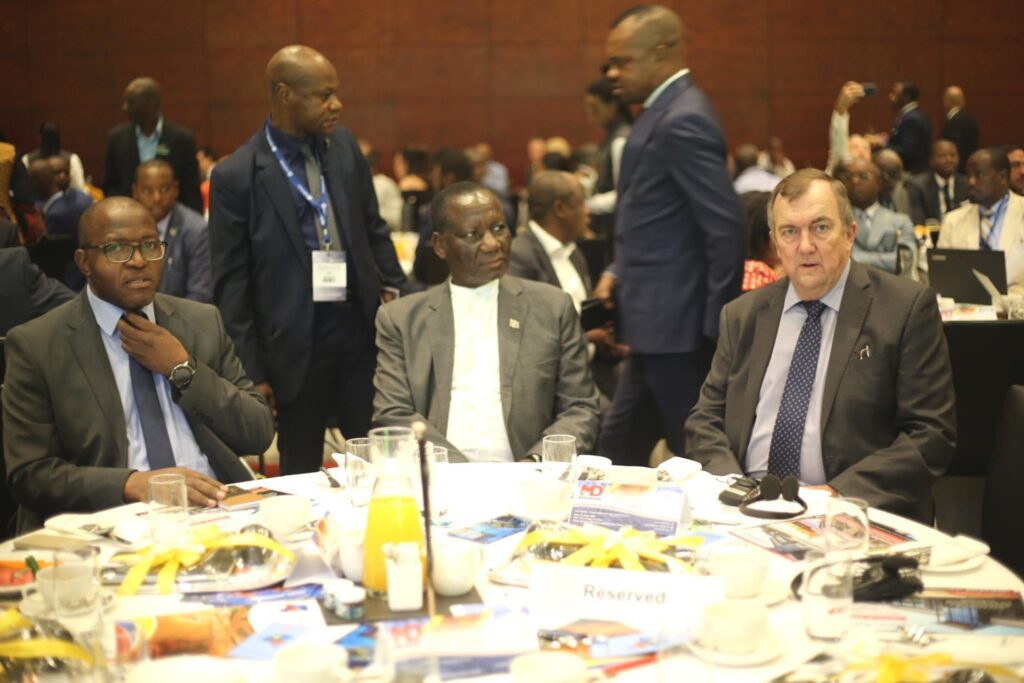
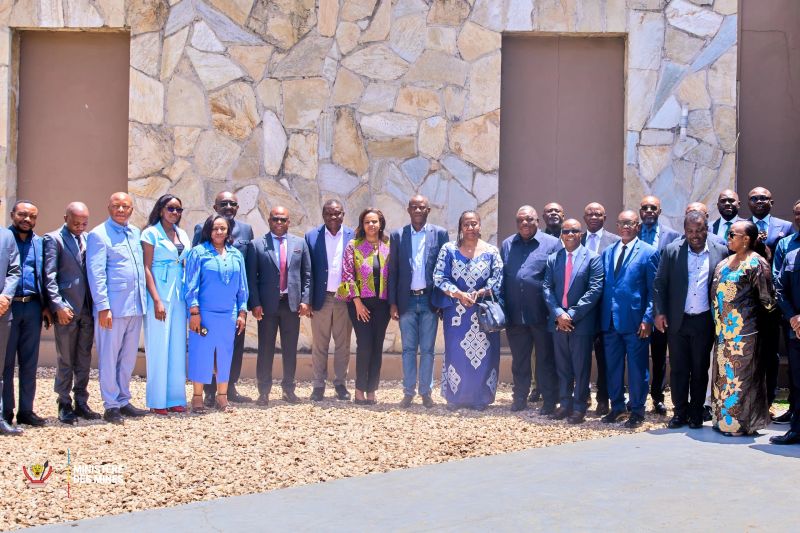
It was with great honour and a profound sense of responsibility, on behalf of the Government of the Democratic Republic of the Congo led by Her Excellency Prime Minister Judith Suminwa Tuluka and the Ministry of Mines under my authority, that Louis Watum, through his representative, officially opened the decisive workshop dedicated to the validation of our National Strategy on strategic minerals and critical metals on 7 January 2026 in Lubumbashi. A pivotal moment in the mining and economic history of the country.
He recalled that “the Democratic Republic of the Congo, endowed with an exceptional geological wealth, is more than ever at the heart of global issues of the energy transition, decarbonisation and the digital revolution. The world’s leading producer of cobalt, holder of colossal reserves of lithium, germanium, colombo-tantalum, copper, gallium, niobium pyrochlore and other strategic minerals, our country is not simply a supplier of raw materials. It must become a major industrial actor, a hub of transformation and value addition on the continent and in the world.”
Without complacency and with pragmatism, he also listed the immense challenges that remain: the weakness of industrial links on our territory; governance and transparency issues; environmental and social impacts that need better control; and the urgent necessity to ensure that resources first benefit the population.
It is to respond to these challenges and seize these historic opportunities that the Ministry of Mines, under the supervision of my office, with the support of partners including primarily Southern Africa Resource Watch (SARW) — a decade-long partner of our country’s mining sector — has developed this draft strategy. This roadmap aims to make the DRC not only a supplier of raw materials, but a hub of manufacturing and innovation in the clean technology value chain. He declared.
“This is the vision carried by His Excellency the President of the Republic and Head of State, Félix-Antoine Tshisekedi Tshilombo, to whom I pay a well-deserved tribute, through the priority given to economic diversification, industrialisation and job creation for our youth,” he added.
Giving clear guidelines, Minister Watum insisted that the strategy to be examined together with several experts rests on five fundamental convictions:
- Resources must no longer be exported only in raw form. The time has come for local transformation, for the manufacture of high-value-added products, to capture a fairer share of the global value chain;
- The mining industry must be sustainable and responsible. It must respect the highest environmental, social and governance (ESG) standards, and contribute directly to the well-being of our populations and the development of the various territories;
- Energy is the fuel of this industrialisation. The immense hydroelectric, solar and geothermal potential of the country must be mobilised to power a green and competitive industrialisation;
- Innovation and training are levers for the future. The country must invest in research, technological innovation and the training of its human capital to build a resilient and knowledge-creating industry;
- Partnership is the key to success. The implementation of this strategy will require a strong alliance between the State, the national and international private sector, the academic world and civil society. This workshop is not a mere formality. It is a crucial step of validation and enrichment by all of you, committed actors of the sector. Your constructive criticism, your concrete proposals and your collective expertise are expected to turn this document into an operational, ambitious and shared roadmap that takes into account the following essential themes: models of local transformation, frameworks for responsible investment, governance of value chains, regional integration and practical mechanisms for sharing benefits with our communities.
In a precise manner, the objective of these two days is not simply to listen, but to co-construct, to propose solutions and pragmatic initiatives beyond the usual speeches and slogans.
Your expertise, your field experience, your diverse perspectives — whether from public institutions, the private sector, the academic world, civil society or communities — are indispensable to refine, validate and enrich this strategic document.
This workshop tried to answer the following central questions: How to strengthen the mapping and exploration of our critical resources? How to develop a competitive and job-creating processing industry? How to ensure that our immense potential in clean energy — hydroelectricity, solar, geothermal — powers this green industrialisation? And above all, how to ensure responsible mining governance that respects ESG standards and is centred on the well-being of populations?
“I make a solemn appeal for frankness, creativity and a spirit of consensus in our debates. The stakes are high: it is about defining the foundations of a modern mining policy that will durably position the Democratic Republic of the Congo as a leader in the green and equitable mineral industry in the sub-region, in Africa and in the world. This is why our country is called the ‘Solution Country’.”
I count on your active contributions during the plenary sessions, panels and group work. May the exchanges be frank, constructive and action-oriented.
In my capacity as Minister of Mines, and with great optimism, I officially declare open the Workshop for the validation of the draft National Strategy of the DRC on strategic minerals and critical metals.
This workshop for stakeholders and experts was supported by Southern Africa Resources Watch (SARW), which is very involved in the governance of the natural resources sector in several countries of Southern Africa.
By Parfait Barack and Divine Mwenda
Discover more from Mining News Group
Subscribe to get the latest posts sent to your email.