
China’s resurgence in global trade is reshaping the power dynamic between the world’s two largest economies.
While the United States doubles down on tariffs and technological restrictions, Beijing’s factories are roaring back to life, fueling a new phase of competition that is more strategic than transactional. The latest foreign trade figures show a sharp rise in Chinese exports in September, defying forecasts that Western restrictions would slow their momentum. For Washington, this rebound comes at a delicate moment.
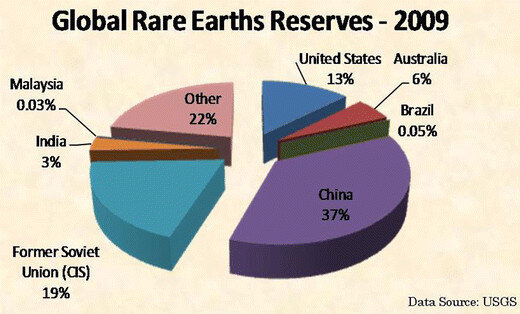
The U.S. administration has sought to use tariff suspensions as bargaining chips, pressing Beijing to ease proposed controls on exports of essential rare earths. Yet data from China suggest that this leverage may no longer be one-sided. Rare earths are not just another element of trade negotiations. They underpin the production of electric vehicles, semiconductors, advanced weaponry, and clean energy infrastructure – the pillars of the 21st-century economy. By tightening its export licensing regime for these materials, Beijing is showing that it can, if it chooses, set the pace of global industrial progress.
For Washington, this is a strategic vulnerability. The United States can impose tariffs, but it cannot quickly replace the inputs its industries depend on. At the same time, Beijing’s ability to sustain export growth while redirecting trade flows toward Asia, Africa, and Latin America demonstrates how deeply embedded its manufacturing ecosystem is in the global economy.
The United States remains the largest consumer market, but China remains the producer the world cannot easily do without. This asymmetry defines the new trading environment. Tariffs are no longer simply tools of protectionism; they have become instruments of geopolitical signaling. Both sides are testing the economic constraints they can withstand to assert strategic dominance. What makes this episode particularly significant is that the expansion of Chinese exports is being driven by markets outside the United States. Its shipments to Europe, Southeast Asia, and developing economies are accelerating, the result of years of investment in logistics, infrastructure, and regional partnerships. In effect, Beijing has insulated itself against the kind of isolation Washington once believed tariffs could achieve.
The implication is clear: the global economy is fragmenting into competing blocs, but production capacity remains overwhelmingly concentrated in China. Western efforts to restructure supply chains are underway – from semiconductor incentives to reshoring programs – but these efforts require time and substantial investment. In the meantime, the Chinese export machine continues to hum, supporting growth not only for itself but for a vast network of suppliers and consumers. For investors, this evolving landscape presents both challenges and opportunities.
The immediate reaction of financial markets – rising commodity prices, currency fluctuations, and swings in manufacturing stocks – reflects uncertainty about the next phase of the impasse. But beyond the turbulence lies a longer-term opportunity. Periods of economic rivalry are often sources of innovation, diversification, and regional development as companies and countries seek to protect themselves against political risks.
The lesson is not to reduce global exposure but to rethink its composition. Investors should pay attention to economies well positioned to capture manufacturing industries migrating out of China, such as Vietnam, India, and Mexico, as well as sectors linked to automation, logistics, and the energy transition. Demand for alternative supply chains will create new winners even as the center of gravity of the global industrial economy remains anchored in East Asia.
At the same time, the dynamics of inflation could become more unpredictable. If tariffs rise and supply bottlenecks persist, price pressures could reappear just as central banks prepare to ease monetary policy.
This would complicate monetary policymaking and amplify volatility across asset classes. A carefully diversified approach, balancing exposure between growth and value assets, will be essential to manage this risk.
Beyond the commercial implications, the deeper stakes lie in the sustainability of globalisation itself. The struggle between Washington and Beijing is no longer about who sells the most goods to whom; it is about who sets the rules of technological and economic progress. Each side is determined to demonstrate autonomy in areas that once relied on mutual interdependence.
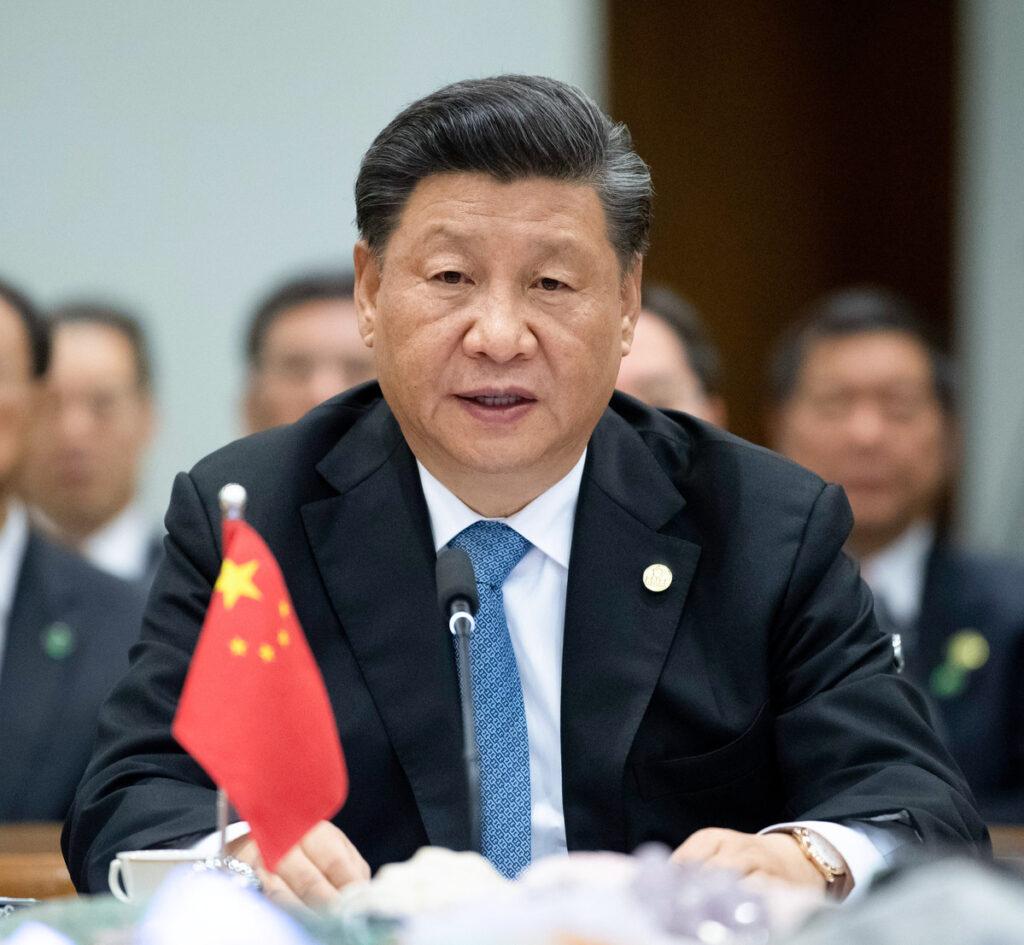
The strength of Chinese exports gives President Xi Jinping confidence at a moment when the United States is seeking leverage. More than mere economic data, these figures constitute a political asset. They allow Beijing to engage with resilience, knowing that its industrial base remains intact despite years of tariffs and sanctions.
For President Trump, the challenge is to maintain pressure without alienating allies who depend on Chinese components and materials. Unilateral escalation risks isolating the United States as much as it constrains China.
For the American strategy to be effective, it will need to be coordinated with Europe and Asia, which is far more difficult to achieve in a context of divergent economic priorities. The balance of economic power does not change overnight, but it is evolving. China’s ability to sustain its export momentum while absorbing external shocks marks a turning point. It reveals a world in which trade conflicts are less about deficits than about dominance over essential resources and technologies. As investors, policymakers, and businesses assess the months ahead, it would be wise to look beyond the announced tariffs. The deeper issue is one of structural competition between two economic systems – and for now, Beijing’s export engine gives it the advantage.
By Nigel Green, CEO and Founder of deVere Group, an independent global financial advisory firm
Discover more from Mining News Group
Subscribe to get the latest posts sent to your email.