
There are mining projects that increase production.
And then there are projects that attempt to change the entire economic logic of a country. The Mine de Fer de la Grande Orientale (MIFOR) clearly belongs to the second category.
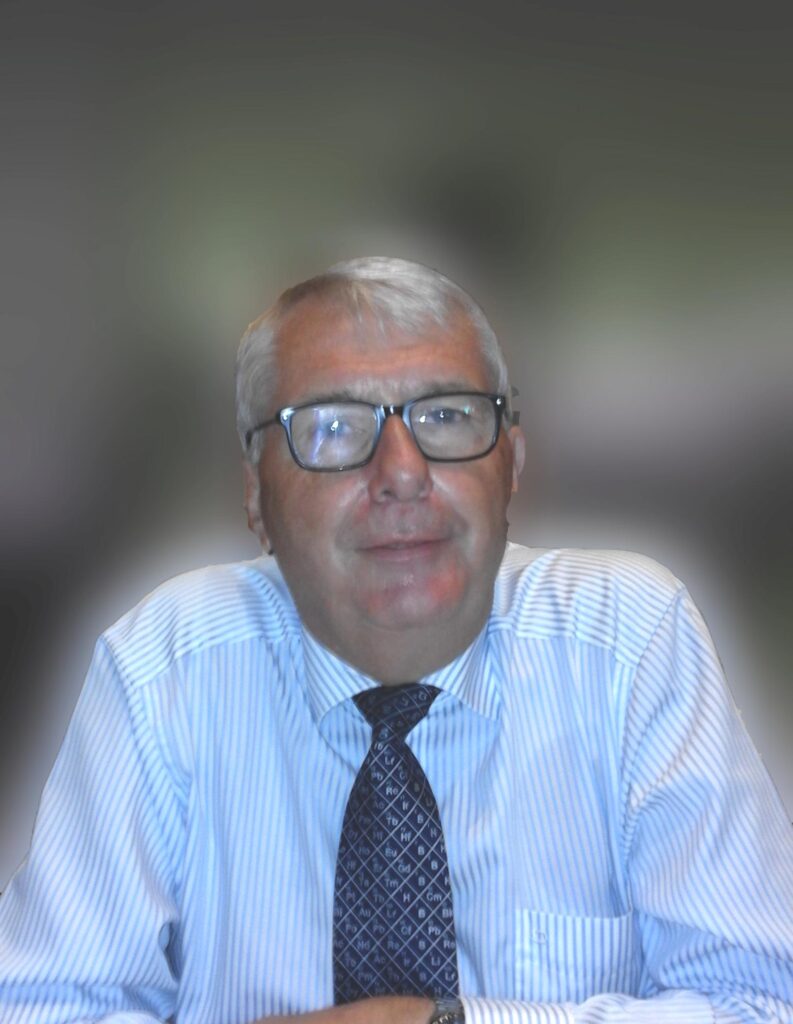
Initiated under the direction of Louis Watum Kabamba, Minister of Mines of the Democratic Republic of the Congo, MIFOR is not being framed as a standalone extraction project. It is being designed as a national economic system — one that connects minerals to infrastructure, infrastructure to industry, and industry to long-term economic stability.
And if you look closely at the structure, the ambition is not just to produce iron ore. It is to redefine how resource wealth actually works in Congo.
A Resource Base That Changes the Conversation
At the center of MIFOR is an iron ore potential that, until now, has remained largely underdeveloped at an industrial scale.
The project is built on estimated resources of 15 to 20 billion tonnes, with iron grades exceeding 60%. In global terms, that immediately places the DRC among the largest untapped iron ore jurisdictions in the world, comparable in scale to major producing regions in Australia and Brazil.
But what makes this different is not just the size of the resource. It is what the government intends to do with it.
Because historically, Congo’s mining model has been simple:
- extract
- export
- repeat
MIFOR is structured to break that cycle.
From Extraction to Industrialization — Intentionally
The most important shift within MIFOR is the move toward industrial transformation at scale. The project is designed not only to extract iron ore, but to process it — and ultimately to produce green steel, with a projected capacity of 10 million tonnes per year.
This is a serious statement of intent because steel production changes everything.
It sits at the center of:
- construction
- transport infrastructure
- manufacturing
- energy systems
In other words, it is not just a product — it is a multiplier of economic activity.
And by anchoring steel production locally, the DRC is attempting to move up the value chain in a way it has historically struggled to do with copper and cobalt.
Scale Matters — And This Is Built at Scale
MIFOR is not designed as a small or incremental project.
The initial production phase targets around 50 million tonnes of iron ore per year, with the potential to scale up to 300 million tonnes annually. That puts it in the same league as some of the world’s largest iron ore operations, including those operated by global giants like Rio Tinto and Vale.
Financially, the numbers are just as significant:
- approximately $28.9 billion in initial investment
- over $679 billion in projected revenue across 25 years
- and more than $300 billion in projected net cash flow
These are not just headline figures.
They are what make the project bankable, strategic, and globally relevant.
The Infrastructure Play — The Real Game Changer
If there is one element that defines MIFOR, it is not mining. It is infrastructure.
Because what is being proposed is nothing less than a national logistics spine, stretching from the northeast of the country to the Atlantic coast.
The project includes:
- a ~3,000 km electrified railway corridor
- integration with river transport along the Congo River
- reconstruction of key rail segments
- and connection to the deep-water port of Banana
This corridor links regions that have historically operated in isolation:
- Ituri
- Haut-Uélé
- Tshopo
- Tshuapa
- Sankuru
- Kwilu
- Kongo Central
For the first time, these areas are being integrated into a single economic flow.
This is not just about moving minerals. It is about:
- unlocking internal trade
- enabling agriculture
- facilitating industrial expansion
- and physically connecting the country
In many ways, MIFOR is as much an infrastructure project as it is a mining one.
Energy: The Foundation of the Entire Model
Ambition without energy is theory and MIFOR attempts to solve that.
The project integrates two major energy systems:
- a hydroelectric complex near Kisangani (750–1000 MW)
- and long-term alignment with Inga III (up to 11,000 MW)
On top of that, a 480 km اﻟﻐﺎز pipeline from Lake Kivu is planned to supply methane for industrial use — particularly steel production. This combination of hydro and gas is critical. Because it supports:
- large-scale mining
- heavy industry
- transport electrification
Without this, the rest of the project does not function.
A More Strategic Approach to Sovereignty
One of the most important — and often overlooked — aspects of MIFOR is how it is structured from a governance perspective.
The model is clear:
- Private capital participates in mining and industrial operations.
- Public ownership is maintained over strategic infrastructure.
This includes:
- railways
- ports
- energy systems
This matters.
Because it ensures that while investors can generate returns, the assets that define long-term national power remain under state control.
It is a more balanced approach — one that reflects lessons learned from past resource agreements.
Beyond Mining: A Full Economic Ecosystem
What makes MIFOR particularly interesting is that it does not stop at mining or steel. It extends into:
- agro-industry
- cement production
- fertilizer manufacturing
- industrial zones along the gas corridor
In other words, it is designed to create economic spillovers across multiple sectors.
And that is how real transformation happens. Not through isolated projects.
But through systems that reinforce each other.
What This Means for Congo — If It Works
If executed properly, MIFOR has the potential to:
- double national mining revenues
- create tens of thousands of jobs
- stimulate industrial growth
- significantly improve infrastructure
- and reduce dependency on raw exports.
But beyond the numbers, the real shift is structural.
For decades, Congo’s economy has been defined by extraction without transformation.
MIFOR attempts to change that by linking:
resources → infrastructure → industry → revenue → stability
That chain is what has been missing.
The Reality Check: Execution Will Decide Everything
And this is where things become real.
Because projects of this scale do not fail due to lack of vision.
They fail due to:
- coordination challenges
- financing constraints
- governance gaps
- and delays in execution
MIFOR requires alignment across:
- multiple ministries
- international investors
- infrastructure developers
- energy providers
To address this, an interministerial commission and a dedicated steering committee have been put in place under the authority of Louis Watum Kabamba.
That structure is critical, because without strong coordination, a project like this cannot move from concept to reality. The Democratic Republic of the Congo has always had the resources.
What it has lacked is a system that turns those resources into sustained national growth. MIFOR is an attempt to build that system.
It is ambitious. It is complex.
And it carries real risk.
But it also represents something rare:
A project that is not just about extracting wealth — but about structuring it.
And if even part of this vision is executed correctly, then MIFOR will not just be remembered as a mining project.
It will be remembered as the moment Congo began to seriously reorganize its economic future.
Discover more from Mining News Group
Subscribe to get the latest posts sent to your email.