
At the heart of Congo’s mining turning point: what Louis Watum Kabamba really said in Toronto — and why it matters.
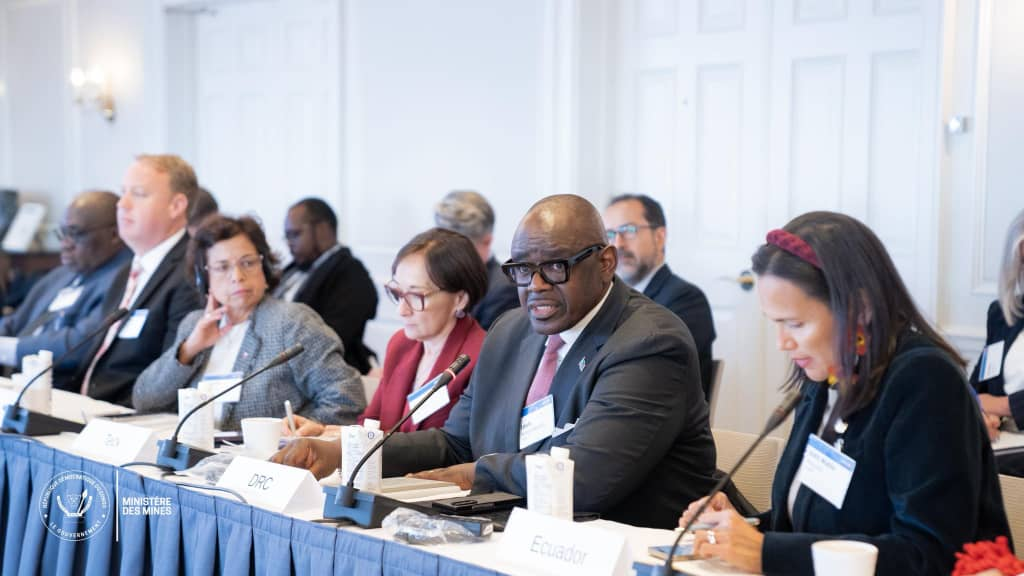
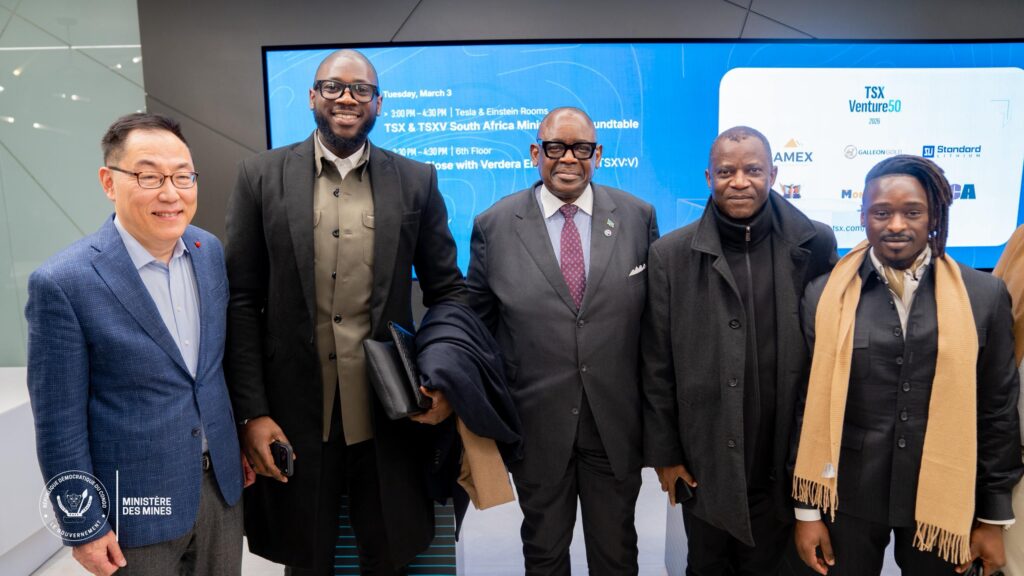
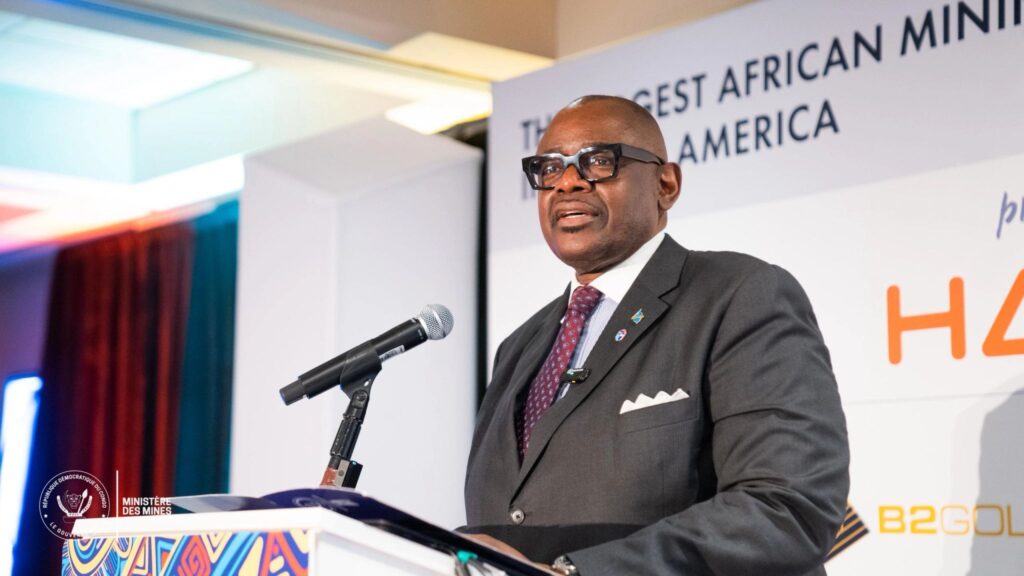
In early March 2026, at one of the world’s most important mining gatherings — the Prospectors & Developers Association of Canada (PDAC) in Toronto — Louis Watum Kabamba, Minister of Mines of the Democratic Republic of the Congo, did not simply deliver a speech. He drew a line. And if you listen carefully to what was said — not just the diplomatic language, but the intention behind it — it becomes very clear: Congo is no longer positioning itself as a passive supplier of minerals. It is positioning itself as a future industrial power.
This was not just a speech — it was a strategy.
At first glance, the intervention followed a classic structure: thanks, continental unity, references to policy frameworks such as the African Mining Vision.
But beyond that, the message becomes much sharper. Mr Watum Kabamba is essentially saying: Africa already has the resources; the problem has never been geology; the problem has been structure.
For decades, countries like the DRC have exported raw minerals — cobalt, copper, gold — only for those same materials to be transformed elsewhere into high-value products and then resold on global markets at much higher prices.
This model, as he clearly indicated, is no longer acceptable.
The real shift: from extraction to control
One of the most important ideas in his speech is often overlooked.
He is not simply talking about mining. He is talking about control of the entire value chain. And that starts much earlier than one might think.
Because whoever controls the geological data, the resource mapping, the feasibility studies controls the foundations of the entire mining industry.
He places strong emphasis on geologists, prospectors and developers — calling them “blessed children of God”. This may seem symbolic, but it is in fact highly strategic.
The Congo is quietly building a different model
Without this, countries remain dependent on external actors, not only for capital but also for knowledge.
And that is where sovereignty is lost first.
What is interesting is that the speech does not stop at ambition — it describes what is already happening.
And that is where it becomes serious.
Under the leadership of Louis Watum Kabamba, the DRC is working on:
- Rebuilding its geological intelligence Through national programmes and institutions such as the Geological Service, the government is focusing on:
- identification of strategic minerals,
- reducing uncertainty for investors,
- transforming unexplored areas into bankable projects.
- Imposing value creation in the country This is probably the most important change. The DRC is no longer satisfied with exporting raw minerals. Policies now encourage:
- local processing plants,
- copper and cobalt refining,
- battery material production,
- early-stage industrialisation.
- Strengthening governance (quietly, but firmly) At one point in the speech, he briefly mentions the enforcement of mining laws and ESG standards — then pauses. That pause speaks volumes. Because in reality:
- compliance is being strengthened,
- oversight is increasing,
- the Mining Code is being applied more strictly,
- transparency is progressing.
- Fighting smuggling and informal systems This is one of the biggest structural problems in the Congolese mining sector. And it is finally being taken seriously. The government:
- is strengthening anti-smuggling institutions,is modernising control mechanisms,is increasing oversight across the entire value chain,is formalising part of the artisanal sector.
A broader vision: Africa refuses to play small
What makes this speech powerful is that it goes beyond Congo. It fits into a broader continental transformation. With clear alignment on:
- the African Mining Vision,
- the African green minerals strategy.
The message is simple:
- Africa no longer wants to remain at the bottom of global value chains.
The continent has:
- the resources,
- the population,
- the market,
- the strategic importance.
What was missing — until now — was alignment and execution.
And that is where it becomes interesting for investors.
If you look at this only from a political point of view, you miss the point. Because it is also a strong economic signal.
What Watum Kabamba is proposing is a shift towards:
- structured investment environments,
- bankable projects,
- local industrial ecosystems,
- long-term value creation.
This opens the door to:
- infrastructure investments,
- transformation partnerships,
- energy projects,
- industrial opportunities.
But with one key difference:
- The rules are changing.
Partnerships will have to be:
- more balanced,
- more transparent,
- more beneficial for the country.
So, what does this really mean?
If we simplify, the message from Toronto is this:
- The Democratic Republic of the Congo is no longer seeking to participate in the global mining industry under the old rules.
- It is seeking to redefine its role.
And under the leadership of Louis Watum Kabamba, this change is becoming more structured, more intentional and more visible.
Many speeches sound convincing at events like PDAC. But this one is important because it is directly linked to concrete policies and actions already underway.
This is not just a vision. It is a positioning.
And if the DRC achieves even half of what is announced, it will not simply be a reform. It will be the first steps in a complete repositioning of one of the world’s most important mining countries.
By Divine Mwenda
Discover more from Mining News Group
Subscribe to get the latest posts sent to your email.