

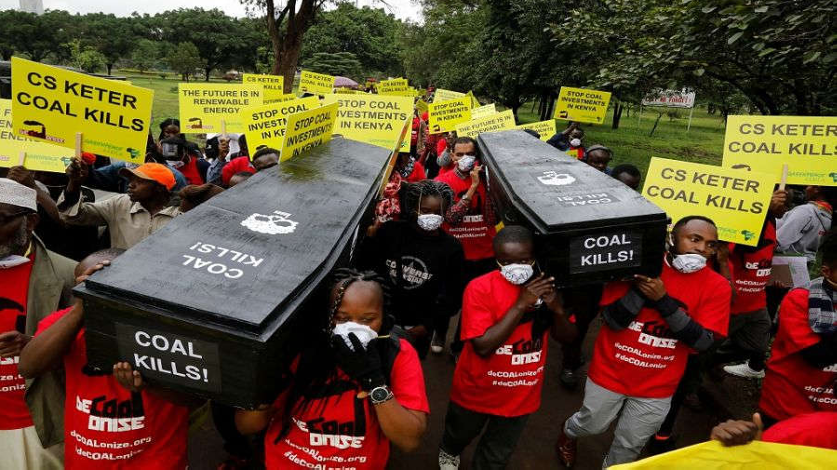
A high Kenyan court has blocked the construction of a 2 billion dollar coal-fired power plant near the coastal town of Lamu, which is home to a site listed as a UNESCO World Heritage site.
The developers of the 1,050 megawatt installation, majority-owned by Centum Investment Co., failed to ensure adequate public participation, declared Judge Francis Mwangi Njoroge in a virtual decision rendered on Thursday in Malindi.
“We share the opinion of the tribunal according to which public participation was not carried out in accordance with the amended provisions of the law,” declared Njoroge. “We consider that there was no appropriate analysis of the site and of the alternatives to the project.”
This decision ends a six-year dispute concerning the power plant project, which began in 2019, when a Kenyan tribunal annulled an environmental permit for what was to be the country’s first grid-connected coal power plant. Amu Power Co., a joint venture between Centum and Gulf Energy Ltd., and the project developer, took the matter to court to have this decision annulled.
The Chief Executive Officer of Centum, James Mworia, did not immediately respond to a text message requesting a comment.
Community groups opposed the power plant, arguing that it risks having a negative impact on human and marine life. The old town of Lamu is home to the oldest and best-preserved Swahili village in East Africa and was listed as a World Heritage site in 2001.
The energy giant GE withdrew from the Lamu coal power plant project after announcing its intention to cease supporting new coal power plant constructions in 2020. “Consequently, we have not been involved in any way in the Lamu coal power plant project,” declared a spokesperson for GE Vernova by electronic mail.
The use of coal, the most polluting fossil fuel in the world, is criticised by environmentalists for its emissions contributing to global warming. Yet this fuel remains popular in developing economies that are struggling to supply energy to their growing population.
Kenya plans to ensure universal access to electricity by 2030 and to convert its entire grid to renewable energies. It is the leading producer of geothermal energy in Africa, which, together with hydroelectricity, wind and solar, represents nearly 90% of electricity production, according to official data.
Industrial powers, including South Africa, are closing their coal power plants and replacing them with green energy sources.
By MNM with David Herbling
Discover more from Mining News Group
Subscribe to get the latest posts sent to your email.