
Cape Town — February 2026
At the Investing in African Mining Indaba, one voice carried unusual clarity, firmness, and strategic direction:
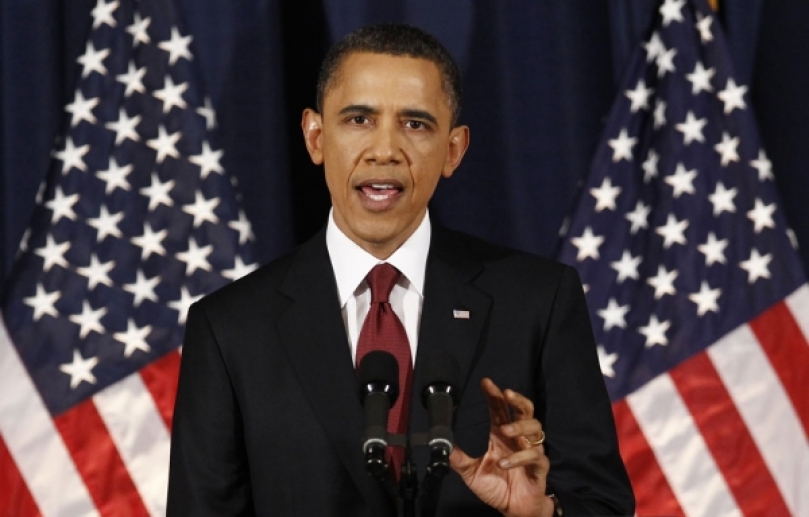
His Excellency Louis Watum Kabamba, Minister of Mines of the Democratic Republic of the Congo.
Across ministerial panels, bilateral engagements, and high-level announcements, His Excellency presented more than policy updates.
He presented a coherent doctrine for the future of Congolese mining—rooted in sovereignty, formalisation, diversified partnerships, and long-term national value.
By the close of Indaba week, one reality had become clear:
the DRC is no longer negotiating from potential—it is negotiating from position.
Presenting the DRC as a Strategic and Reliable Partner
During the ministerial plenary, His Excellency outlined a vision of the DRC as a stable, predictable, and responsible investment destination—a country ready to convert mineral wealth into shared prosperity rather than short-term extraction.
He emphasised governance transparency, institutional strength, and security as essential pillars for long-term mining investment, while reaffirming a national economic model centred on local value addition, industrialisation, and integration into global value chains.
This positioning reflects a decisive shift:
from exporter of raw minerals → to architect of industrial value.
Sovereignty in a Time of Global Mineral Competition
One of the most closely watched moments of the week emerged during discussions surrounding cooperation between the DRC and the United States on critical minerals.
While some international commentary framed the partnership through a geopolitical rivalry lens, His Excellency delivered a clear correction:
• The U.S. framework is a platform for discussion, not a sale of resources.
• Nothing has been sold, and nothing will be exchanged without genuine benefit to the Congolese people.
• The DRC is pursuing diversified partnerships globally, guided by development—not power competition.
These clarifications directly addressed narratives suggesting imbalance or inexperience among potential partners and reaffirmed that Congolese national interest remains the sole compass of engagement.
Crucially, His Excellency stressed that cooperation with the United States is strategic for peace, security, and development, and will proceed in line with agreements reached in December 2025—demonstrating both openness and firmness in equal measure.
Correcting Misconceptions: The Reuters Moment
During a media exchange at the DR Congo House at Indaba, a question asked by a Reuters journalist suggested that American actors lack the experience or capacity to develop mining projects in the DRC.
His Excellency firmly rejected this narrative.
He clarified that:
• The U.S.–DRC minerals engagement is exploratory and mutually structured, not transactional.
• Claims that Congo is “selling anything for nothing” are categorically false.
• The DRC will work with any capable partner—American, Chinese, European, or otherwise—strictly on the basis of mutual benefit.
More broadly, his response reframed the discussion entirely:
the issue is not which power wins influence, but whether Congo wins development, peace, territorial integrity and sovereignty.
From Raw Extraction to Industrial Power
Throughout the week, His Excellency consistently returned to one structural objective:
transforming the DRC from a raw-material exporter into an industrial mining economy.
Key priorities include:
• accelerating local processing and beneficiation,
• attracting technology and capital for industrial infrastructure,
• deepening integration into global clean-energy supply chains, and
• expanding cooperation beyond traditional partners.
This is not incremental reform.
It is economic repositioning at continental scale.
Formalising Artisanal Mining With Dignity and Order
Another defining pillar of the Minister’s Indaba message was the formalisation of artisanal and small-scale mining—a livelihood for millions of Congolese and a crucial component of global cobalt supply.
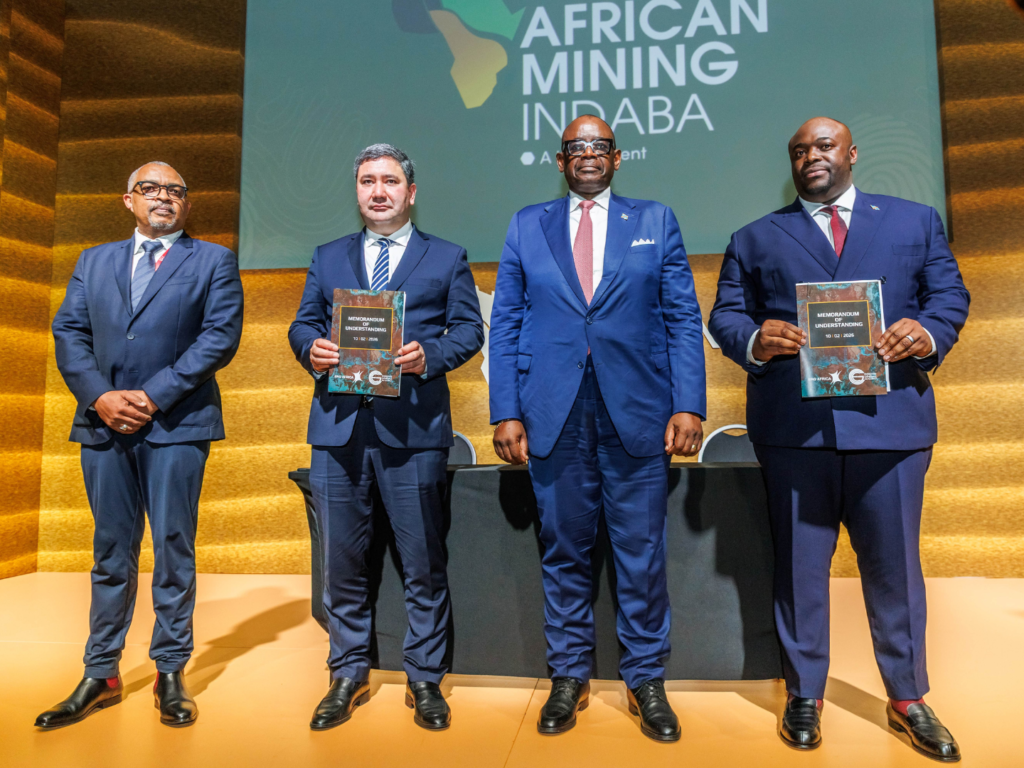
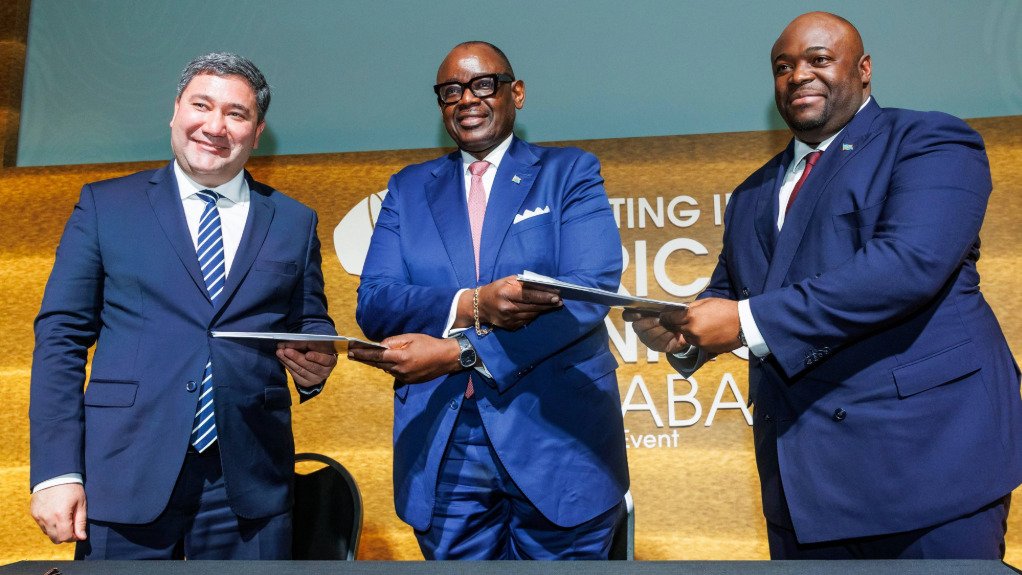
The MoU signed by Eurasian Resources Group (ERG) and the Congolese entity Entreprise Générale de Cobalt (EGC) in Cape-Town was an important achieved milestone and a crucial momentum, according to Eric Kalala N’Santu – EGC’s CEO- and the Minister Louis Watum Kabamba.
Policy direction emphasises:
• traceability and responsible sourcing,
• worker safety and social protection,
• structured cooperatives and legal zones, and
• integration of artisanal miners into the formal economy.
The philosophy is clear:
formalisation, not exclusion—order that protects dignity rather than erasing it.
A Unified Doctrine Emerges
By the end of Mining Indaba 2026, His Excellency Louis Watum Kabamba’s engagements formed a single, unmistakable narrative from the Day One during the Ministerial Panel on the 9th of February to the end of this annual international Mining Conference happening in Africa ;
• Sovereignty before geopolitics
• Value addition before export dependence
• Formalisation before informality
• Partnerships defined by Congolese interests
Taken together, these positions signal a country redefining how mineral wealth translates into power, stability, and global relevance.
Conclusion: A Turning Point, Not a Moment
Mining Indaba 2026 did not simply showcase investment opportunities.
For the Democratic Republic of the Congo, it marked a declaration of direction.
His Excellency Louis Watum Kabamba did more than respond to panels, questions, or headlines.
He articulated a state vision for the future of Congolese mining—one grounded in legality, credibility, industrial growth, and national dignity.
And perhaps most importantly, he made one principle unmistakably clear:
Congo’s minerals will shape the future of global energy—
but this time, that future will also shape Congo.
Discover more from Mining News Group
Subscribe to get the latest posts sent to your email.