
Ensuring 100% green, reliable and autonomous energy for its various operations related to its mining activity and at the same time supporting the many local communities by providing access to clean and sustainable energy are the two strengths that support this large-scale investment by the Congolese gold giant, and one of the African giants, Kibali Goldmine.
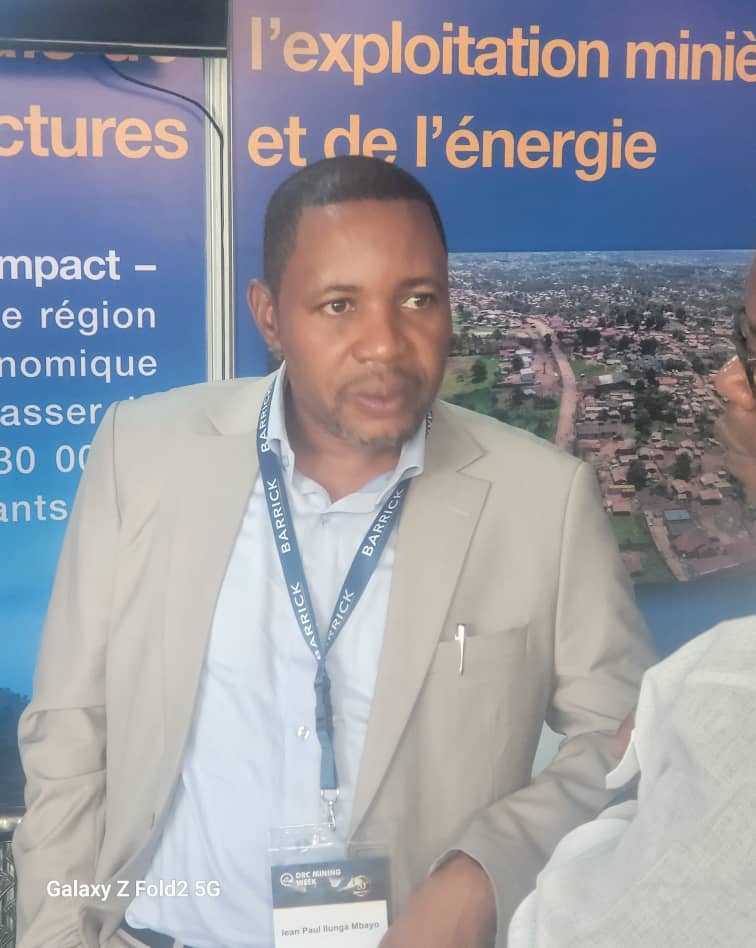
These points were revealed by engineer Jean-Paul Ilunga Mbayo, Director of the Electrical Department of this pioneering private company in its production of energy for its mines and local communities, during a presentation during the celebration of the 20th anniversary of the mining week “DRC MINING WEEK” which is being held at the Pullman Grand Karavia hotel in Lubumbashi in the province of Haut-Katanga from June 11 to 13, 2025.
For engineer Jean-Paul Ilunga Mbayo of Kibali Goldmine, energy remains a key factor for mining activity that generates industrial development. He indicated to the panellists that the Kibali gold mine began operations with a thermal power plant fueled by diesel generators, totaling an installed capacity of 43 MW.
This enabled it to begin a green transition towards renewable energies in 2015 to reduce its dependence on thermal generators, decrease energy production costs and reduce its carbon footprint.
This transition materialized with the commissioning of three hydroelectric power plants, namely the Nzoro II, Ambarau and Azambi power plants, for a cumulative installed capacity of 42 MW.
He nevertheless stressed that in order to strengthen energy resilience during the low water period and stabilize the internal electrical grid, this Gold leader in the DRC has launched its project to build a 16 MW solar power plant coupled with a battery storage system with a capacity of 15 MW and 30 MWh.
Thus, the Key Impacts of Kibali Goldmine’s investments could not go unnoticed with this high-flying engineer, including the 61.5% reduction in energy costs, equivalent to an annual saving of more than USD 82 million, the reduction of carbon emissions, promoting sustainability, the contribution to the development of the communities of Durba and Watsa by providing 13,140,000 kWh per year, thus promoting economic and local growth, not forgetting the improvement of the quality of life.
In the same context, it should be noted that training on modern technology for qualified Congolese engineers was also organised, to name just one example.
In conclusion, Jean Paul Ilunga demonstrated to the audience the energy cost statistics if there were no investments:
The overall annual energy demand averages 341,640,000 kWh.
With Hydro at USD 51,344,661.87/year and without Hydro at USD 133,400,027.4/year, this equates to 61.5% savings or USD 82,055,365.53 per year, not counting the reduction in CO2 emissions.
By Jeef Kazadi for Leader and MNM
Discover more from Mining News Group
Subscribe to get the latest posts sent to your email.