

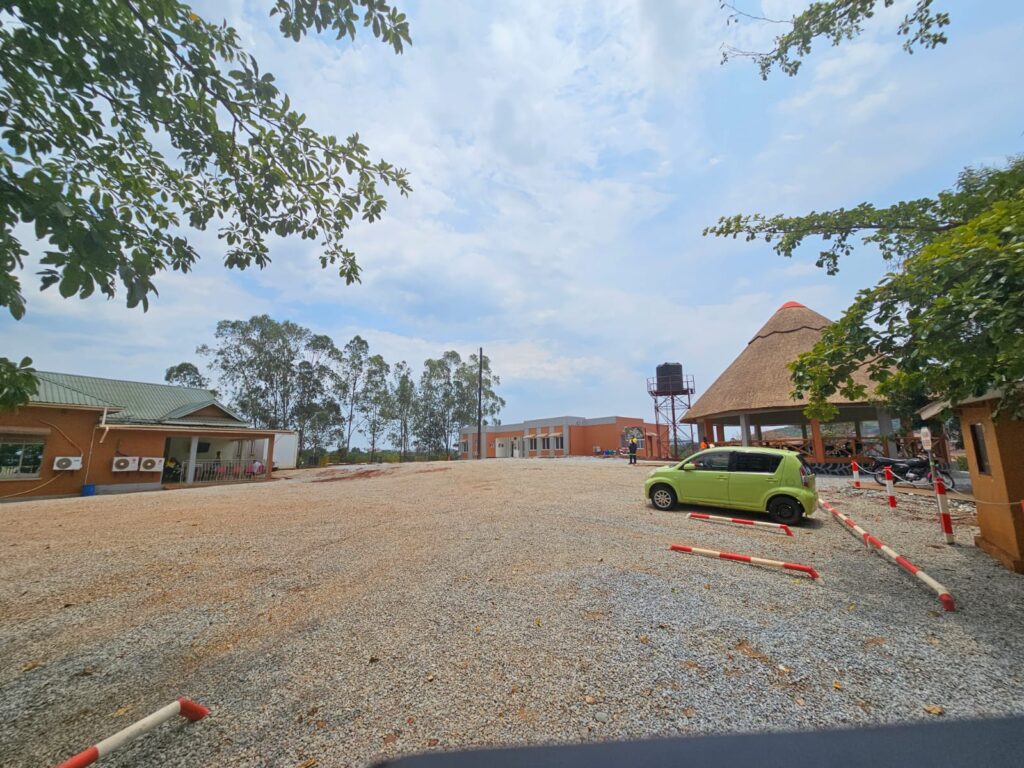
This unprecedented investigation report from civil society reconstructs the facts in detail and establishes the responsibilities of the central and provincial governments.
The civil society investigation mission, under the supervision of Mr. Delphin Tshimena assisted by Mr. Dieudonné Been Masudi (the former is a mining expert and agent in mines and quarries who headed the Mines and Gas Desk of the World Bank for the DRC and Congo Brazzaville, he also worked as a consultant for the German cooperation GIZ; the latter is a lawyer and a well-known human rights defender, currently a doctoral student in law at the University of Lubumbashi where he also teaches at the Faculty of Law) had carried out its fieldwork in Doko and Durba in two stages by contacting several stakeholders directly involved in the incidents of Bandayi and Mege, on Zone B (Prohibition Zone) of Kibali Goldmines, in order to inquire about the situation in order to propose possible solutions to the stakeholders with a view to peaceful coexistence.
Our editorial team came across a copy of the unpublished civil society report, of which we are publishing long essential parts for everyone to read and understand, without comment. These parts consist mainly of summaries of various meetings that reconstruct the facts, identify the actors, and whose content establishes responsibilities while exonerating Barrick and Kibali Goldmines.
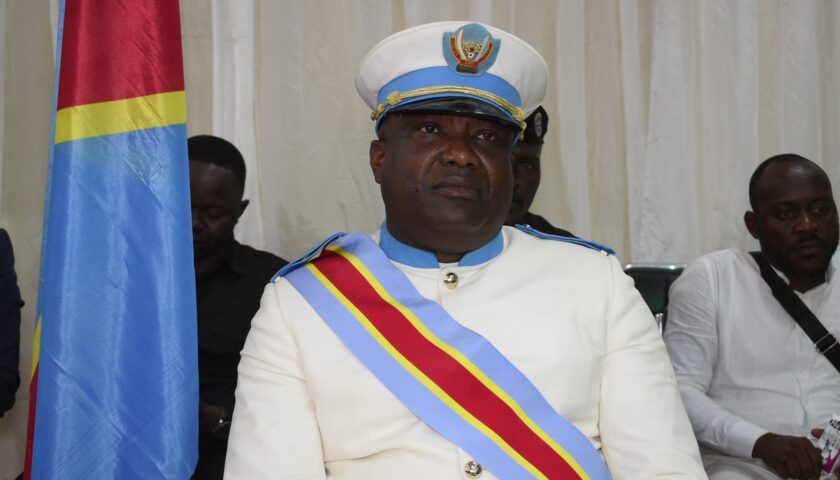
This publication reproduces excerpts from a technical report of an investigation conducted with the support of the coordination team of the Platform of Civil Society Organizations Working in the Mining Sector (POM). This report, intended for national public authorities and Kibali Goldmines SA, a copy of which has been obtained by our editorial staff, will be available in the coming days.
The coordination team of the Platform of Civil Society Organizations Working in Mining Companies (POM) recruited eight independent investigators from civil society in Lualaba, Haut-Katanga, and Kinshasa to conduct investigations and studies. These investigations were intended to inform the preparation of a report on the impact of the demolition operations carried out by state security forces in Durba, around the Kibali Goldmines site in Watsa Territory, Haut-Uélé Province, Democratic Republic of Congo, within the exclusion zone of structures within the Kibali Goldmines SA mining perimeter in Durba. The operations were supervised by Mr. Delphin Tshimena, a mining expert and quarrying agent, assisted by Mr. Dieudonné Been Masudi, a human rights lawyer and lecturer at the Faculty of Law of the University of Lubumbashi.
The investigation was conducted in two phases. The initial phase, from November 28 to December 6, 2021, allowed investigators to meet with officials from various government departments, representatives of civil society ( [1] ), affected communities, and officials from Kibali Goldmines SA. The second phase, from January 23 to February 4, 2022, focused primarily on meetings with provincial authorities.
This survey was carried out as part of the assessment of the impact caused during the relocation and resettlement operations of the inhabitants of the Bandayi and Mege neighborhoods, in Durba, Kibali Sector, Watsa Territory in the Haut-Uélé Province, in collaboration with several people and entities whom we would like to thank warmly.
One of the final objectives was to propose a practical guide for compensating land occupants as provided for by the provisions of Articles 279 to 283 of the Mining Code and its Regulations.
On October 19, 2019, and at the request of the provincial public authorities, the houses built in the villages of Mege and Bandayi, located in Durba in the Watsa territory, were demolished. This demolition was carried out as part of a relocation process within one of the mining concessions of the Kibali Goldmines SA company, covered by Mining Permit (PE 5052) and located in Exclusion Zone B.
In response to the demolition of homes under the country’s mining law, a violent demonstration was organized on October 22, 2021. Security forces (police and army mobilized for the occasion) intervened to suppress the unrest, resistance, and even a form of rebellion displayed by the demonstrators. At the end of the demonstration, injuries and deaths were reported.
Kibali Goldmines SA defended itself by saying that the operation, conducted by the public authorities, had been organized in accordance with the law and that the populations, who happened to be in this area, had already been compensated and resettled.
Paradoxically, some victims of the demolitions, grouped within the two informal associations (Bandayi and Mege), continue to demand compensation, while acknowledging that their houses had indeed been located within the Prohibition Zone or Zone B of Kibali Goldmines SA (a zone prohibited for all private residences) and that they had been relocated well before the demolition in question. However, they claim that their presence on the site on the day of the demolition was due to their preparations to leave and that they were caught off guard by the demolition.
This clearly demonstrates that there are certain alleged victims who are improperly attempting to be compensated twice.
The overall objective of the work is to convince the local populations living near the Kibali Goldmines SA mining area that they can live together peacefully for the sustainable development of the Haut-Uélé Province.
In particular, POM intends to:
- Assess the legality of the relocation and resettlement operations carried out in the two villages;
- To restore the truth about the unfortunate events in Bandayi and Mege;
- To identify the responsibilities of each stakeholder in the context of human rights violations;
- Formulate recommendations for a successful resolution of the crisis caused by the aforementioned incidents;
- To propose avenues and solutions for redressing the harm suffered by victims of human rights violations.
A. Survey Methodology
The investigators proceeded through contacts and interviews with political, administrative, and traditional authorities. They also conducted similar interviews with several representatives of local communities and civil society before meeting with the managers of Kibali Goldmines SA.
They also undertook a review of the legal and regulatory framework of the mining sector, with particular attention to the formal conditions for the proper holding of mining titles, the compensation of land occupants, and a review of the experience of land occupant compensation practices recorded since the promulgation of the Mining Code of 2002, with the aim of determining, on the basis of known and recorded cases, the current evolution from the point of view of jurisprudence and triangulation with other experiences of compensation of land occupants in the Provinces of Haut-Katanga and Lualaba.
To achieve this, documentary, historical and comparative methods, as well as open-ended questionnaire interviews and participant observation, were used to collect the data necessary for the investigation.
This report analyzes the genesis and nature of the conflict with regard to the legal and regulatory framework governing the relocation and resettlement of land occupants.
B. Genesis and nature of the conflict
Part of the mining perimeter of the Kibali Goldmines SA mining concession, called “Exclusion Zone B”, had been established by Provincial Decree No. 01/MAA/021/CAB/PROGOU/PO/2010.
This decree formally indicated the prohibition of the installation of new populations in this area of the Kibali gold project, where the villages of Bandayi and Mege were located well before May 2010.
The former occupants of said area had already been relocated and resettled in Kokiza ( [2] ).
Suddenly in 2020, a group of people emerged demanding to be relocated as rightful owners of the Bandayi and Mege villages within the exclusion zone of the Kibali Goldmines mining perimeter. Another group made further demands.
B.1. Context of the events
Faced with numerous invasions and encroachments on its mining areas, Kibali Goldmines SA sent a letter on July 18, 2020, to the Governor of the Haut-Uélé province, copying several authorities, including the Prime Minister. In this letter, Kibali Goldmines SA transmitted a memorandum concerning the tensions recorded in the Watsa territory, following the encroachment on its mining area by illegal artisanal miners operating on sites located within its mining concession ( [3] ).
On the one hand, Kibali Goldmines SA had requested the national and provincial authorities of the Government to respect the imperative provisions of the Mining Code and Regulations, especially in relation to its exclusive rights over its mining perimeter. On the other hand, Kibali Goldmines SA had asked the government authorities to take all the necessary police measures and arrangements for the immediate cessation of all illegal artisanal mining activities in its mining area, as well as the eviction of all illegal occupants of its sites, in accordance with Provincial Orders No. 01/JPLK/054/CAB/HU/2017 of June 22, 2017 ( [4] ) prohibiting artisanal and semi-industrial mining in all consolidated mining areas of the industrial concessions of Kibali Goldmines SA and No. 01/JPLK/CAB/HU/2017 ( [5] ) of November 28, 2017 establishing the Commission for the eviction of semi-industrial and artisanal operators in the mining concession of the company Kibali Goldmines SA in the Territory of FARADJE /South Sector.
On July 25, 2020, Kibali Goldmines SA sent a letter to the Prime Minister concerning the situation of tension and growing insecurity in the territory of Watsa, caused by the invasion of the GIMA quarry 28 km from Doko of its mining perimeter, by more or less 700 artisanal miners, without title or right, operating under the label of a de facto association ”United Federation of United Artisanal Miners of Watsa” (FUEAUW) led by Messrs. AGASA MUNGANGA and OPI LOKONGO benefiting from the protection of agents of the Congolese National Police, ( [6] ).
Four months later, on December 3, 2020, in a letter addressed to the Governor of the province ( [7] ), Kibali Goldmines SA transmitted to him the documents relating to the site planned for the resettlement of communities affected by the Kalinva-Ikanva project to Avokala. These documents concerned the timeline of activities for the Kalinva-Ikanva RAP, the urban development plan for the Avokala resettlement site, and the draft report for the modern subdivision plan for Avokala.
The government authorities had finally responded to Kibali Goldmines SA. The Prime Minister had instructed his Minister of Mines, by letter dated August 24, 2020 (10), to organize a mission to restore law and order in the Watsa territory, particularly in the Kibali and Mangbetu sectors of Haut-Uélé Province. Furthermore, the Ministry of Mines was asked to include in this mission personnel from the Ministries of Mines and National Defense, as well as a representative from the Prime Minister’s office.
In accordance with instructions from the central government concerned with the governance of its province to allow the applicant company to carry out its program of exploiting the updated replacement mines in said zone (B) from the first half of the year, the head of the provincial executive had taken a series of decrees, namely:
- Provincial Order No. 01/CBN/085/CAB/PROGOU/PH-U/2021 of March 9, 2021 concerning the demolition of uncontrolled constructions erected in Zone B of the mining perimeter of the Kibali Goldmines SA company in the territory of Watsa ( [8] );
- The establishment of a Commission composed of four provincial Ministers, namely the Minister of Mines (President), the Minister of the Interior and Security (1st Vice -President), the Minister of Justice and Human Rights (2nd Vice -President), and the Minister of Land Affairs, Urban Planning and Housing (Rapporteur); of the Attorney General at the Court of Appeal of Haut-Uélé (member), of the Commander FARDC/Uélé Operational Sector (member), of the Provincial Commissioner of the PNC (Principal Coordinator of Operations), of the Provincial Inspector of the Territorial (member), of the Provincial Director of the ANR (member), of the Senior Advisor to the Governor in charge of legal and administrative matters (member), of the Advisor to the Governor in charge of security matters and Relations with the Provincial Assembly (member), of the Chief of Staff of the Provincial Minister of Mines (members), of the Head of the Provincial Division of Mines (member), of the Head of the Provincial Division of Urban Planning and Housing (member), of the Administrator of the territory of Watsa (member), of the Head of the local post of the ANR/Watsa (member) and of the Territorial Commander of the PNC/Watsa (member).
A mission order dated March 18, 2021, was signed by the Provincial Governor for 15 days. The purpose of this mission was twofold: first, to raise awareness among illegal artisanal miners established and/or operating within the KGM SA company’s perimeter at the Gima, Zakitoko, Watsa Moke, Dilolo, Makoro, Abinva, Atekoma, and Marabi sites in the Faradje and Watsa territories, their managers or leaders, as well as local customary authorities or those responsible for the sectors, groups, or villages concerned; and second, to implement the plan for the definitive cessation of illegal artisanal mining activities within the Kibali Goldmines SA company’s perimeter in the Faradje and Watsa territories, prior to the demolition of unauthorized structures ( [9] ).
Following this mission order, an official communiqué dated April 8 and signed by the Chairman of the Special Commission, the Provincial Minister of Mines, in accordance with Provincial Decree 085 of March 9, 2021, informed the Watsa community that all unauthorized constructions erected in Zone B (across all villages), within the mining perimeter of Kibali Goldmines SA, were strictly prohibited and had to be demolished by their owners or by the Provincial Government’s Special Demolition Commission within 15 days, starting from the expiration of a prior ten (10) day notice. Those who refused to comply would have only themselves to blame ( [10] ). A notification had been delivered to all residents of Zone B ( [11] ).
A letter dated April 16, 2021 and signed jointly by the Chief of Sector Dieudonné SURUR, the Village Chief Mege MALALA Claude, the Councilor of the Village Chief Mege TEGENDEKO LANGO as well as the President of the Youth League AMOSE MOSA. … Seeing our settlement with the youth, the boundaries that you put back and forth in Mege, Aungba, Mengu, Bandayi we were happy to insure it those boundaries because as the forest is hiding it. Our goal is really to provide that maintenance work will help our youth to reduce unemployment gradually. That is our request to you ” (sic).
In fact, this was a form of recognition of the prior existence of the boundary markers delimiting said Zone B, placed by Kibali Goldmines SA in Mege, Aungba, Mengu, and Bandayi. On the other hand, it was a request for assistance in addressing youth unemployment, formulated by the Chief’s Advisor, through a subcontracting agreement for the maintenance and upkeep of the zone and the markers, which were completely overgrown with tall grass. ( [12] )
Another collective mission order (Isiro-Watsa) was signed by the Provincial Governor on August 26, 2021, to continue the suspended mission in order to prepare the implementation plan for the demolition of all unauthorized constructions located in Zone B. The mission was also to proceed, with the support of PNC units, with the actual demolition of all unauthorized constructions erected in Zone B, in strict compliance with the relevant legal and regulatory texts. ( [13] )
A third collective mission order for 30 days was signed on October 1, 2021 by the Provincial Governor for the same duties as the previous one. ( [14] )
In accordance with decisions taken by the national and provincial authorities, the security forces had been called upon to evict illegal artisanal miners and demolish unauthorized constructions.
According to the police report and corroborated testimonies from local authorities and civil society, the demolition operation took place from October 8 to 18, 2021 without any incident.
The declaration of the Honorable MAMBIDI, National Deputy of the constituency of Watsa and former employee of Kibali Goldmines SA, who had publicly declared himself against the relocation, on the grounds that it had been instigated by the public authorities for the demolition of the constructions in Zone B, had prompted the leaders of civil society represented by Mr ATAFO La Vie (president of the League of Youth of the territory of Watsa), Mrs Elisée PATI, president of the civil society forces vives (Sector-Chiefdom Kibali); Mrs LODA Hélène, president of the civil society of the DRC (Sector-Chiefdom Kibali) as well as Pastor CHANG, president of the New Civil Society, territory of Watsa.
According to the Congolese National Police, the demonstration resulted in two deaths: Sub-Lieutenant MBUMBA of the DSF (Directorate of Security and Security) and a young man. Significant material damage was reported, including the offices of the ANR (National Intelligence Agency) in Durba, the PNC (Congolese National Police) sub-station, and the FARDC (Armed Forces of the Democratic Republic of Congo), as well as 12 police officers’ houses that were burned down. Arrest warrants and wanted notices issued against the aforementioned civil society leaders were suspended following the intervention of National Deputy MAMBIDI KOLOBORO Jean-Marc and Senator BATUMOKO AFOZUNDE Jean-Pierre.
Contrary to the PNC’s report, the parliamentary mission’s report stated 4 deaths and 13 injuries.
It should be recalled that the New Civil Society of Congo/DURBA Section, had organised in February 2021, a peaceful march to demand from the company Kibali Goldmines SA, a number of facilities in order to get the population out of unemployment.
This march, which was supervised by members of the Congolese National Police (PNC), was peaceful. A memo was even read by its coordinator, Jean SEFA GOMISAME, at the end of the demonstration. This civil society group made accusations such as discrimination against the unemployed population; a lack of transparency in recruitment and procurement; and the fact that the workforce was essentially foreign due to discrimination and injustice perpetrated by Kibali Goldmines SA ( [15] ).
Since the start of its mining operations in the Watsa Territory, Kibali Goldmines SA had carried out several relocation and resettlement operations for local communities. The construction of the new town of Kokiza, the site chosen for the resettlement of the Project Affected Populations (PAPs), is an example of this.
For several years the city of Kokiza has housed all the former inhabitants of the villages formerly established on the perimeter constituting the current Exclusion Zone A as well as all the former inhabitants then established in Zone B ( [16] ).
Zone B had been the subject of demolition of anarchic constructions carried out by a Special Commission established by the Provincial Government of Haut-Uélé in execution of the Provincial Decree of March 9, 2021 ( [17] ).
This special commission was led by the provincial Minister in charge of Mines, accompanied by his colleagues from the Interior and Land Affairs, the Attorney General at the Court of Appeal of Haut-Uélé, as well as officials from the Congolese National Police (PNC) and security services.
The (illegal) occupants of the Mege, Marakeke, Sayi Mengu and Mofu sites had been included in the program of the first PAP relocation and resettlement operation of 2012.
All PAPs from these sites had been resettled in the City of Kokiza after receiving payment of the compensation and indemnities provided for by the legal and regulatory provisions in force ( [18] ).
B.2. Conduct of the second wave investigation (from 2015 to 2022)
The investigation was carried out through two separate field missions, namely a first mission carried out from November 26 to December 6, 2021, and a second mission carried out from January 23 to February 1, 2022.
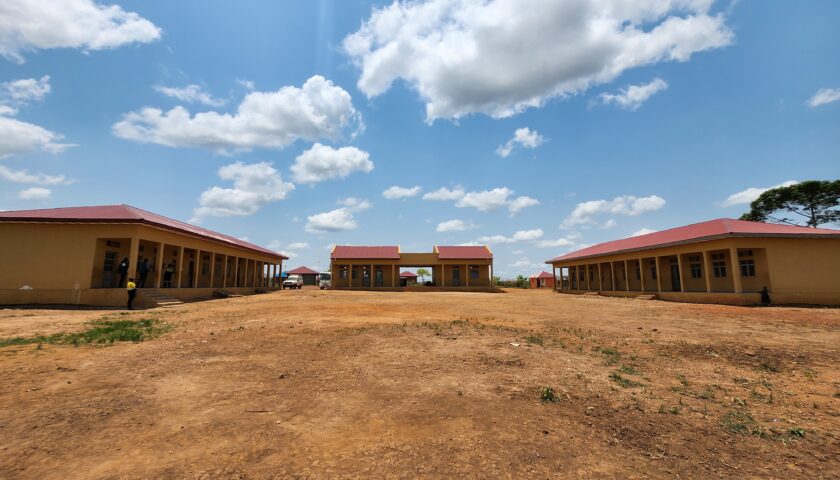
First mission
A. Meeting with the Watsa territory administration
In the capital of the territory in Watsa, located 14 km from the city of DURBA, the investigators had met with the Head of the Territory office, Mr. Jacques, in the absence of the Administrator, who was in Isiro for the welcoming ceremony of Mrs. Denise NYAKERU, wife of the President of the Republic and Head of State.
The Head of Office indicated that he had no information regarding the case because he had recently been appointed to the position. He recommended meeting with the Administrative Secretary of the Kibali Sector regarding any questions concerning the events of October 2021 related to the relocation and destruction of homes in Bandayi and Mege, as well as the three-day public demonstration that followed these events.
The head of the office had just indicated that the territory of Watsa, with its area of 16,015 km2 , consisted of 3 sectors (Kibali, Mangbutu and Ngombari) and 6 groups (Mari-Minza, Andikofa, Kebo, Ateru, Andobi and Walese bordering the province of Ituri).
B. Meeting with two members of the PAP
Considered as the leaders of the Project Affected Persons (PAPs) on behalf of the formerly relocated from the villages (Angbarabo, Aungba, Bakangwe, Camp Mission, Camp Chauffeur, Gumu (part), Karagba, Kasia, Kisanga, Kokolo and Salambongo to Kokiza), Mr. UGWAYO EWAYUA, President and BUTIMA MAWADRI Jean-Marie, Vice-President had not given any information on the events of October 2021. They had only pleaded for the compensation of the PAPs of Kokiza, while indicating that the process of their relocation had not been respected from the start.
However, it should be noted that Mr. UGWAYO had already benefited from a house built in Kokiza, according to his own statements and several testimonies. Furthermore, he had taken Kibali Goldmines to court to claim compensation, with the assistance of legal counsel from the organization “Lawyers Without Borders.” At the conclusion of the legal proceedings initiated before the courts in Isiro, Mr. UGWAYO’s claim was dismissed.
C. Meeting with Congolese Civil Society
Civil society in Congo had been involved in raising awareness among the populations of Bandayi and Mege.
His representative, Jacques BEMBA, had pointed out that in Bandayi there was only one person holding a land concession, which had been sold to Kibali Goldmines SA in 2009. This is Mr. ZUMAYI who now lives as a displaced person in Kokiza.
Curiously, one of his sons reappeared in Bandayi in 2014 to build a school. This school was destroyed during the demolition process.
That same year, the village chiefs had begun the process of subdividing and selling land for agricultural activities. Subsequently, the initial buyers began reselling to new people.
Civil society in Congo acknowledged that prior to the demolition of the homes of illegal occupants, the Special Commission had carried out public awareness campaigns.
This civil society actor nevertheless deplored the fact that the political and administrative authorities, including police officers, had also appropriated, privately and personally, plots of land on Site A in KILIMALANDE, to the detriment of the rightful owners.
As a recommendation, he had suggested respect for legal texts and advocated dialogue between local communities and Kibali Goldmines SA.
D. Meeting with representatives of the Bandayi and Mege communities
The delegates from the two communities (Bandayi and Mege) were received in turn by the investigators.
For the Bandayi, represented by the Crisis Committee (see attached list), the delegates accused Kibali Goldmines SA of being complicit with the government, instead of acting as an impartial arbiter. They then cited the figure of 13 deaths recorded during the “peaceful” march following the demolition of the buildings.
The communities had accused Kibali Goldmines SA of not respecting the relocation procedure, even though it had already promised to respect this procedure since 2018.
On the other hand, they had accused the authorities of abandoning their constituents, who lost their property without any humanitarian assistance while the victims spent and continue to spend nights under the open sky and in bad weather.
The residents of Bandayi also criticize Kibali Goldmines SA for not having asked the residents to leave the concession in 2014, when it had requested from the customary chiefs the marking of the road to facilitate the passage of the vehicles.
However, and incomprehensibly and unjustifiably, most of the inhabitants of Bandayi were in possession of the land parcel records in a way that they themselves knew the secret to.
They had complained that company agents had been accompanied by police and military personnel, asking each resident to stand in front of their door to have their picture taken.
This operation failed because not everyone knew when the officers were supposed to arrive. Rather than calling it a demolition, the communities refer to this operation as “a relocation carried out with weapons, the bollards placed by the police…”
While the residents of Bandayi had been warned, those of Mege, who had only 6 registered houses and said they were not concerned by the process, were surprised by the destruction of their homes by the State.
E. Meeting with the administration of the KIBALI Sector
The meeting scheduled with Sector Chief Dieudonné SURUR, through his administration, did not take place. His administrative secretary told investigators that the Sector Chief was still in Isiro.
The Sector’s Administrative Secretary indicated that the meetings he did not attend, as well as the demolition operation, had been planned by the provincial government. The latter had requisitioned the excavator from the Kibali Sector. The Kibali Chiefdom-Sector comprises six groups: Mandra-Mandra, Ngilinga, Kengengo, Tora, Mangote, and Anguleyi. The Sector Chief’s compound is located in Mandra-Mandra, 5 km from the town of Durba.
F. Interview with the Vicar Abbot of the parish of Saint Barbara of Kokiza
According to this Catholic priest, everyone was aware that BANDAYI was a village that was to be relocated, but people resisted and did not take the awareness campaign seriously.
And yet, a delegation of provincial ministers had spent an entire month raising awareness among the population. The village of Mege, which was not officially targeted, was curiously affected. Most of the residents of Banayi and Mege hadn’t had time to move their belongings. They thus lost everything during this heavily militarized operation.
Three days after this operation, civil society organized a general strike. On the fourth day, they then organized a “peaceful” march which unfortunately ended in gunfire resulting in deaths.
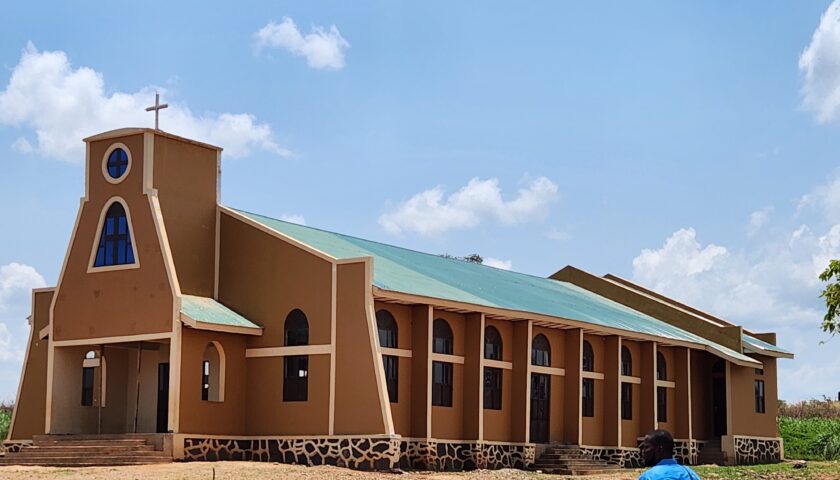
Kokiza is home to the Catholic parish of Saint Barbara, with its large chapel, whose construction using sustainable materials was entirely funded by Kibali Goldmines SA, which had just completed its total rehabilitation work. Bandayi and Mege were not among the 23 villages relocated to Kokiza.
According to the priest, Kibali Goldmines SA had not followed the normal relocation procedure. Furthermore, the local population was not clearly informed about the boundaries of Kibali Goldmines SA’s mining concession.
Regarding the relocation of Bandayi and Mege, the money the company had spent on resettlement was not used for that purpose. It was used for the benefit of Kibali Goldmines SA employees, their families, and local authorities.
The vicar of Sainte Barbe found it surprising that whenever Kibali Goldmines SA planned a relocation and resettlement activity, the information about this activity was already known to the local population through Kibali Goldmines SA agents themselves. This often complicates matters and causes serious problems for the successful completion of the activity.
G. Meeting with the Civil Society Forces Vives
This segment of Civil Society, for its part, noted that the lack of agreement between the community and the provincial government was due to the fact that Kibali Goldmines SA had not shown the documents proving that this disputed part was located in its concession.
The demolition operation was surrounded by such chaos that those not directly involved in the process (public administration, army, police, etc.) were the main beneficiaries. This, curiously, is one of the pieces of information disseminated within the communities by agents of Kibali Goldmines SA.
Civil Society/FV officials had indicated to investigators that the contradiction maintained by the provincial government, including a statement made by the governor of Haut-Uélé province in July 2019 in BANDAYI, through his statements encouraging communities to be relocated as many times as possible as long as Kibali Goldmines SA had not started either the exploitation or the final demolition of homes without consulting local authorities ( [19] ).
To help ease tensions, Civil Society/FV had taken some steps towards Kibali Goldmines SA, which had only decided to rely on the provincial government.
H. Second meeting with Congolese Civil Society
According to Congolese civil society, the march of October 21 and 22, 2021, was organized by civil society (as a whole) and local dignitaries. The main organizer was ATAFU LAVIE, president of the youth league, alongside LODA and ELISEE MASIYA. The demands focused primarily on the boundaries of the Kibali Goldmines SA concession, implying that Zone B did not belong to the company.
This branch of Civil Society also indicated to investigators that the insecurity observed in the territory of Watsa had been created by a group of Congolese from neighboring provinces.
Furthermore, this group had incited some residents of Bandayi and Mege to use fetishes to resist the eviction of the company’s Zone B. A national police officer had his arm amputated as a result of this practice, and poisoned arrows were used by local security guards for self-defense (at both sites).
I. Interview with land administration officials
Officials from the Land Registry and Cadastre of Watsa had given their technical views concerning Zone B of Kibali Goldmines SA.
They began by emphasizing the specific nature of land and soil management in relation to mining companies ( [20] ). The Mining Code revised in 2018 settles the question of the primacy of mining law over land law ( [21] ).
State officials had rejected several applications submitted by residents of Watsa and Makoro (Faradje Territory) seeking land titles, because the coordinates of these applications were located within the mining perimeter of Kibali Goldmines SA.
They also acknowledged that the Kibali Goldmines SA mining concession had been demarcated since 2014 (boundary marked with posts (boundary markers)). The occupation by the local population occurred after the demarcation.
Land administration technicians had indicated that a team from the provincial government had come to Durba in 2016 to ask Kibali Goldmines SA to proceed with the closure of the area in question.
Two individuals had obtained titles (lease agreements and registration certificates) because their plots of land were located outside Zone B belonging to the company. These are the owners of the “EDEN” and “RHINO BLANC” hotels.
Another team from the province had come to check whether the residents of Bandayi and Mege had invaded the Exclusion Zone without the proper authorization. Official reports exist documenting the removal of boundary markers by illegal encroachments.
Land administration officials had reaffirmed to all missions that they had never granted contracts to private individuals on this mining concession.
Therefore, there has never been a housing development in Bandayi and Mege. Rather, it was former SOKIMO employees who built houses in the fields which they later sold to other people.
They had also reported that Congolese compatriots from other provinces had played an acculturation role by influencing the locals to illegally invade the Kibali Goldmines SA mining concession.
Having been part of the Special Commission, the registrar of real estate titles and the head of the Cadastre division of Watsa acknowledged having offered their expertise in the sub-committee for development by describing the distribution of plots in the 3 sites of the new subdivision obtained by the Province on the basis of a deed of transfer from the head of Sector KIBALI Mr Dieudonné SURUR.
| DISTRIBUTION OF PLOTS IN THE NEWLY DEVELOPED SITES ( Source: Special Commission) | |||
| No ORDER | SITE | NUMBER OF PLOTS | OBSERVATIONS |
| 01 | A | 225 | Partially occupied |
| 02 | B | 1500 | Not yet distributed |
| 03 | C | 00 | Work continues |
| TOTAL | 1725 | ||
Table 1 Distribution .
J. Meeting with the staff of Kibali Goldmines SA on site in Doko
A presentation of the activities of Kibali Goldmines SA was made, including the relocation to Bandayi and Mege, the tensions between Kibali Goldmines SA and the communities that occupied Zone B, under the direction of the Director of the Social Department.
For Kibali Goldmines SA:
- The occupations and all constructions erected in the Prohibition Zone (Zone B) of the Kibali Goldmines SA mining perimeter, particularly in the sites known as Bandayi and Mege, were manifestly illegal and stemmed from a clear intention to defraud on the part of their authors.
- All available documentation clearly demonstrated that Kibali Goldmines SA had carried out the relocation and reinstallation of the PAPs in the city of Kokiza in compliance with the laws and regulations in force, as well as international standards in this area.
- The preliminary findings of the judicial investigation conducted by the Public Prosecutor’s Office at the Court of Appeal of Haut-Uélé in Isiro also established that no occupant possessed a title deed. The Land Registry and Property Titles services within the jurisdiction indicated that they had never subdivided any land in Zone B.
- Faced with this fraud, the violent resistance of these occupants, and unable to take justice into its own hands, the company was forced to resort to the competent political and administrative authorities to put an end to this situation of incivility, with the aim of finalizing the exploration work and starting mining operations.
- Notwithstanding the illegality of all these occupations and constructions within its perimeter, Kibali Goldmines had requested and obtained from the authorities in charge of the eviction operations of the people who had erected the anarchic constructions, the consideration of human considerations in favour of the illegal occupants, in accordance with its policy and the standards of the BARRICK Group.
- She had pledged to contribute to the development work of the housing estates offered by the Provincial Government, by opening access and traffic roads, delimiting the plots with the installation of boundary markers, carrying out water drilling work and constructing water fountains with a drinking water distribution network, and providing households with kits including galvanized sheets, rafters and nails to allow for the rapid construction of temporary housing.
Kibali Goldmines SA had stated (to civil society investigators) that it remained available to provide all the information required to the attention of the highest authorities of the Republic and to any organization or person of goodwill concerned with contributing to the emergence of the truth without complacency, to shed full light on all aspects relating to the illegal occupations and anarchic constructions on its permits including Zone B (Exclusion Zone defined by the country’s mining code) legally circumscribed by the Congolese State – owner of the land and subsoil, guarantor of the safety of natural and legal persons as well as their property according to the constitution of the country – as well as on all these incidents which have occurred in recent days in order to establish the responsibilities of each stakeholder.
The following answers were given regarding the following main points:
- Why did it take until 2020-2021 to realize that some sites were overrun and Zone B was illegally occupied ?
Kibali Goldmines SA had started mining operations in the Zone since 2009 and not in 2020 or 2021.
This area had been completely demarcated by 2-meter-high posts, installed under the supervision of Cadastre Minier (CAMI).
At that time, Kibali Goldmines SA had identified 243 residents who held individual identification cards. Subsequently, the number of residents began to increase.
At the time mining operations effectively began in this area, Kibali Goldmines SA observed several unauthorized constructions. For this reason, the company contacted all relevant authorities, ultimately including the Prime Minister’s office.
She had also undertaken actions solely directed at provincial and local authorities. She had also done so towards civil society, which was supposed to guide the population.
All related correspondence has been made available to the investigators.
The company had even taken legal action to have the terminals returned. A report had been drawn up before the magistrate in charge of the case was assaulted by protesters.
(2). What was Kibali Goldmines SA’s reaction to the Governor’s statement?
In response to the controversial speech by the Governor of the Haut-Uélé Province during a meeting and as a form of protest, Kibali Goldmines SA sent a letter to the provincial government, reminding them that the company regularly pays surface rights, even in mining areas not covered by mining operations.
Kibali Goldmines SA traces and maintains roads in and beyond the territory of Watsa by paying FONER.
(3). Did Kibali Goldmines SA provide any assistance in the operations carried out by the public authorities?
Kibali Goldmines SA responded favorably to the provincial government’s request by providing a supply of sheet metal, rafters, and nails. The same applies to the development of sites A and BC, granted by the Kibali Sector, through road construction, the installation of water fountains, etc., all within a completely humanitarian framework and in accordance with the company’s internal and international principles and standards.
The State itself took charge of drawing up lists of beneficiaries, allocating plots of land and distributing kits through provincial authorities.
(4). What does Kibali Goldmines SA think of the work of Civil Society?
Kibali Goldmines SA had noted the glaring lack of coordination from Civil Society.
She noted that instead of supporting local communities and acting as a link between Kibali Goldmines SA and the population on the one hand, and between Kibali Goldmines SA and national authorities on the other, local Civil Society leaders had unfortunately sponsored all the marches which often resulted in burning tires in the streets, ransacking of state offices, and acts of violence against Kibali Goldmines SA’s property and agents.
The good wheat should be separated from the chaff in this Civil Society.
Kibali Goldmines SA expected that Civil Society could monitor the use of the allocation and use of the mining royalty that it regularly pays each month to the ETDs (Decentralized Territorial Entities) in compliance with the law.
(5). What is the state of human rights at Kibali Goldmines SA?
Kibali Goldmines SA has always been very attentive to respect for human rights and complies with international standards under the rigorous supervision of Barrick Gold.
In relation to the planned demolition operations in Zone B, which were initially scheduled for April 2021, Kibali Goldmines SA sent a letter dated May 19, 2021 to the provincial authority, on the orders of Barrick DRC, requesting the suspension of said operations in view of the need to take into account, in all future operations, humanitarian considerations while promoting good relations with communities, in accordance with international standards and Voluntary Principles on Security and Human Rights in the Extractive Sector as well as the good practices of the Barrick Group.
K. Meeting with the Country Director of Barrick DRC and Managing Director of Kibali Goldmines SA
The Country Director of Barrick DRC and Managing Director of Kibali Goldmines SA, Cyrille Mutombo, was keen to remind everyone of the need to identify stakeholders, train local actors already involved in advocacy efforts, and structure them by setting up a structure responsible for coordinating advocacy actions in support of Kibali Goldmines SA.
The lack of coordination between civil society and the public administration had led civil society actors to serve themselves at the expense of local communities. For example, Kibali Goldmines SA had offered $300,000 in funding for the rehabilitation of Watsa Hospital. This sum was embezzled by officials in the Watsa Territory with the complicity of certain civil society leaders.
The initiative to revive the Community Delegates Forum (FDC), composed of all social strata of the population (65 people), for the treatment of all community issues, had been nipped in the bud by local politicians whose only leitmotif was the pursuit of their personal interests.
The State’s abdication of responsibility was evident insofar as, although the company fulfilled its duties by paying the taxes, duties and fees owed to the State, the latter had abandoned all its sovereign responsibilities to the Company.
Mege is an extra-customary center, particularly created after 2012 by SOKIMO and which only had a village chief in 2015.
Regarding the eviction of illegal occupants from Zone B, an executive from Kibali Goldmines SA noted not only the disinformation maintained by members of parliament but also the lack of reliable data and statistics from political-administrative authorities and decentralized public services (land administration, urban planning and housing, etc.).
The same applies to the communication error made by the provincial governor, which created confusion among his constituents, even though the error was subsequently corrected. These are all factors that contributed to maintaining the imbroglio in the business environment of Kibali Goldmines SA, the only mining company in the area.
SECOND MISSION
(I). THE ENCOUNTERS
A. Meeting with the Kibali Sector Chief Dieudonné SURUR
A key figure in the eviction of occupants from Zone B affecting the villages of Bandayi and Mege, the local community leader Dieudonné SURUR acknowledged giving an interview in his courtyard where he stated: “We were aware of several complaints from Kibali Goldmines SA regarding Zone B. This Zone had been demarcated by CAMI, by placing boundary markers. Unfortunately, the population had not been informed. Mege was home to very few people, who had their fields. On the other hand, the people who had already left Bandayi had returned en masse” ( [22] ).
The local community leader indicated that some residents of Bandayi had left of their own accord after the awareness campaign, while those in Mege had not been reached. Furthermore, the territorial, sectoral, and village authorities had not been involved in the meetings organized by the special commission established by the provincial governor.
The traditional chief also deplored the fact that some members of the Commission in charge of distributing the kit had helped themselves to the detriment of the beneficiary population.
It was thus established that the Sector Chief should also be aware of the composition of the kit that each victim had received following the demolition (sheet metal, rafters and nails).
Chief Surur blamed the provincial government for the failure of this operation, claiming they had used his name despite not being a member of the Commission. He also criticized Kibali Goldmines, particularly its Social Department, for not consulting him regarding the handover of the kits to the Commission.
The statements of the Head of Sector Kibali are not true ( [23] ) insofar as his Administrative Secretary had indicated that the Commission had organised meetings in the meeting room of the sector capital.
The deed of transfer of the portions of land of the village of Kalimalande, by the Head of sector SURUR acting as customary owner and the Province of Haut-Uélé represented by the Provincial Minister in charge of Territorial Development, Land Affairs, Urban Planning and Housing, Hydrocarbons and Energy, had been signed in the said room ( [24] ).
This concession in the village of Kalimalande had been subdivided to accommodate all the populations relocated from Zone B and resettled in sites A, B and C.
B. Meeting with the Chief of the MANDRA-MANDRA TADRI TONAKAS group
Like the head of Sector SURUR, the head of the Mandra-Mandra Group, TADRI TONAKAS alias Mandra-Mandra, had stated that Kibali Goldmines SA had indeed demarcated Zone B, but without informing the traditional chiefs.
He then indicated that the provincial authorities had not made contact with the traditional leaders.
Unlike his peers, Chief Mandra-Mandra had also indicated that there had been no awareness-raising for the relocation and resettlement process.
It seems clear that there is confusion or misunderstanding regarding the relocation-relocation process and eviction at the level of customary chiefs.
C. Interview with the Administrator of the Watsa territory
Mr. MAKANDA MWAMBA LUBUSU, Administrator of the territory of Watsa, indicated that he did not have information and statistical data on the eviction operations, the demolition of buildings, as well as on the demonstrations of October 21 and 22, 2021.
He had been threatened on several occasions because he was not a native. He had not been involved in the meetings, as the traditional chiefs lamented.
The Watsa Territory Administrator acknowledges that upon his arrival in Watsa, he had been part of a local security council which had noted the destruction of the boundary markers by the inhabitants of Bandayi.
Prior to the demolition operation, Bandayi had been sufficiently made aware of the situation on several occasions.
Mr. Matthieu ADJOKO, president of Bandayi where he did not live, had been cited as one of the leaders of the incitement of the population.
This state official had recalled his letter of July 11, 2018, addressed to the Director General of Kibali Goldmines SA, concerning the eviction of Bandayi and Mege, following the anarchic constructions in Exclusion Zone B.
In this letter, he informed Kibali Goldmines SA of the resolutions taken at the end of the meetings he had convened with the Kibali Sector Chief, the Mandra-Mandra Group Chief, the Bandayi Neighbourhood Chief and the heads of the Real Estate Titles, Cadastre, Mines and SAEMAPE divisions as well as the members of the Local Security Committee of the Territory.
During the said meeting, two committees were formed, one for the Bandayi district (not village) and the other for the Canaan district.
For Bandayi, the boundary that had disappeared had to be restored. The Kibali Sector Chief, Dieudonné SURUR, had been tasked with ordering the inhabitants to leave the places they were illegally occupying.
For Canaan, which included the villages of Angarakali, Apointe and Canaan, it had been recommended that it be relocated by Kibali Goldmines because of the risks associated with the mining that Kibali Goldmines SA had carried out in these villages ( [25] ).
D. Meeting with the Commissioner of the Congolese National Police/Watsa
As a member of the operational team, the PNC’s Commanding Officer, Colonel TWITE, indicated that upon his arrival in Watsa in 2018, he had the opportunity to conduct a field visit, accompanied by agents from Kibali Goldmines SA, technicians from the Cadastre and Land Titles department, to observe the boundaries of the mining perimeter, on which there were only a few huts belonging to farmers.
Some time later, Kibali Goldmines SA began to complain about the encroachment on its mining perimeter, as customary chiefs had begun to grant plots of land within the mining perimeter.
It was necessary to help Kibali Goldmines SA secure its concession where houses made of sustainable materials had already been built since 2019.
The police had conducted investigations which revealed that the Kibali Sector Chief was managing the mining royalties alone, without sharing them with his staff. This is why village chiefs had also begun allocating plots of land and issuing deeds, countersigned or stamped by the Sector Chief himself.
The inhabitants of this area had been registered for 2 months, followed by an awareness campaign for the population upon the arrival of the provincial delegation.
The demolition operation took place in a calm atmosphere. This operation was supervised by the PNC (National Police) in the company of a geologist and the Governor’s Advisor, who was equipped with a GPS, from October 8 to 10, 2021.
Two days later, a demonstration (peaceful march) took place in the center of Durba, intended to show solidarity with the residents of Bandayi and Mege. This demonstration unfortunately resulted in injuries and deaths, and the ransacking of public service (Territory) and security (PNC, FARDC, etc.) offices.
Organised by Civil Society leaders including Lavie ATAFU (president of the United League of Youth for Development, LUJD), ladies Hélène LODA and Elisée PATI as well as Pastor CHANG, this march had been officially banned by the Sector Chief.
The conclusions of the police investigations carried out attributed responsibility for the clashes to the leaders of Civil Society who had organised marches involving the population and especially young people (after drugging them) for their business dealings.
A link had been established between the leaders of Civil Society and the events in Bandayi and Mege, insofar as Lavie ATAFU was not awarded the contract for the construction of the mining concession’s perimeter fence (barbed wire) by Kibali Goldmines SA. Meanwhile, Ms. Elisée PATI was to be responsible for manufacturing the cadastral markers, which were to be sold to the residents of Bandayi for plots located in Zone B.
It should be noted that the head of the Civil Society leaders had participated in raising awareness among the population in the context of the relocation of Zone B.
It was abnormal that he could organize marches under any pretext whatsoever against Kibali Goldmines.
Under the supervision of the president of the taxi drivers Trésor BIBI, this demonstration continued as far as Durba, with the ransacking of the tollbooth and the theft of equipment and materials from Kibali Goldmines SA, kept in containers.
The police also indicated that the eviction and demolition operation took place from October 15 to 18, 2021, without any disputes or incidents.
The marches were launched three days later at the instigation of the Honorable MAMBIDI KOLOBORO Jean-Marc ( [26] ), elected representative of Watsa, from October 21 to 22, 2021. ( [27] ).
The laxity of provincial and local authorities had been criticized because no serious investigation had been carried out in the face of the serious human rights violations recorded.
E. Meeting with the Federation of Congolese Businesses (FEC)
Two FEC/Watsa officials had confirmed the existence of a conflict of interest between Civil Society leaders and executives of the company Kibali Golmines SA based in Doko, in the context of the awarding of subcontracting contracts.
The FEC could not understand why Kibali Goldmines SA’s subcontracting contracts were signed in defiance of the rules of the Regulatory Authority for Subcontracting in the Private Sector (ARSP) and in total ignorance of the federation of Congolese businesses.
The purpose of ARSP is to regulate the activities of subcontracting ordered by private companies, operating in all sectors of the national economy, ensuring in particular compliance with the application of the conditions required in the conclusion of contracts and in the exercise of subcontracting activities.
It is responsible for applying the appropriate sanctions provided for in the event of a violation of legal, regulatory and contractual provisions relating to subcontracting.
It is also responsible for the application of the administrative sanction of suspension or closure of a company, provided for in Article 28 paragraph 2 of the Law establishing the rules applicable to subcontracting in the private sector and for the publication of the list of eligible subcontractors according to their areas of activity ( [28] ).
F. Interview with the Chairman of the Local Development Committee (CLD)
The village of Bandayi had been occupied with the blessing of the local customary authority. The latter had divided the village, allocated the plots and issued land titles.
For the development stakeholders in Durba, Kibali Goldmines SA had the right to use its mining area, given that it had already resettled all the former residents who had been provided with houses in Kokiza. However, these residents had chosen to rent out their Kokiza homes in order to illegally resettle in Bandayi.
When Kibali Goldmines SA proposed to trace the road and delimit its concession, at the level of the villages of Bandayi and Mege, that is when the tension began to rise on the side of the illegal occupants.
Regarding the demolition of houses belonging to illegal occupants, delegates from the provincial authority, local and customary authorities, as well as community leaders, had all been involved in the process of raising public awareness.
According to the Local Development Committee (CLD), the village of Mege was not involved in the awareness-raising process.
G. Meeting with the Provincial Minister of Mines
In his capacity as Chairman of the Special Commission established by the Provincial Government, the Provincial Minister of Mines had presented the details on the progress of the operations to demolish the anarchic constructions and to evict the illegal occupants of the mining sites of Kibali Goldmines SA.
The central government’s order to organize a mission to restore law and order in the Watsa territory, particularly in the Kibali and Mangbetu sectors of Haut-Uélé Province, was issued as part of the eviction of artisanal miners working at the Kibali Goldmines SA mining sites. Civil society participated in this operation.
The order from the central government followed complaints from Kibali Goldmines SA contained in its letters 296, 302 and 317/2020 of 15, 17 and 25 July 2020.
In response to this instruction, several organizational, orientation, and evaluation meetings were held through the following four cells or subcommittees: *Communication and Awareness, *Planning, *Identification and Justice, and *Security, in accordance with Provincial Order No. 01/CBN/081/CAB/PROGOU/PH-U/2021 of February 22, 2021. This Commission was specifically tasked with:
- To identify and prioritize sites occupied by artisanal mining operators, which must be subject to an immediate cessation of activity in the short and medium term;
- To identify those responsible and/or leaders of these activities;
- To determine or establish the list of customary authorities and/or sector chiefs of these sites;
- To determine the boundaries of Zone B;
- To identify illegal occupants and unauthorized constructions in Zone B, and;
To assess the security situation of the sites of illegal artisanal mining (Gima, Makoro, Abinva, etc.) and Zone B.
Ultimately, it was the units of the Congolese National Police, supported by other unseen security forces, who carried out the effective demolition of all the illegal constructions erected in the area.
The operation proceeded without incident. For three days, the demonstrators had attacked symbols of the state (PNC offices, ANR post, Economy office) as well as police residences in Durba. The toll: 4 dead and several wounded.
For the provincial government, represented by the Minister in charge of Mines, head of the delegation and chairman of the special commission, the mission had achieved its main objective, which was to free up Zone B belonging to the company.
The relocation process for former residents of Bandaiyi and Mege must continue. Talks with community leaders must continue to restore peace in Watsa/Durban.
H. Testimony of the victim Alpha
Alpha presented itself as a bona fide occupant, having built its building with durable materials outside of Zone B.
For him, the occupancy agreement and the registration certificate were proof that he had legally acquired the plot of land where he had built his building. He should not be affected by the demolition.
However, the testimony of his counsel indicated that, during the operation to identify unauthorized constructions, his client Alpha had never been invited.
It was surprising that stakes were not placed to frame his plot, as the Commission had done for plots in good standing.
His multi-story building had been destroyed after some members of the Commission (senior officers of the PNC) repeatedly tried to extort money and property (car) from him for the preservation of his building.
Having refused the advances (corruption) and aware that his building was covered by a registration certificate ( [29] ) issued by the land services, his building was eventually destroyed and several of his belongings were taken away.
This fact strongly supports the theory that the process of demolishing the buildings by state services, on the orders of the central and provincial governments, was carried out on a truly discriminatory basis.
(II). POSITION OF STAKEHOLDERS
A. Communities
- KIBALI GOLDMINES SA had to comply with the law (Mining Code and Regulations), by compensating the communities in general and in particular the inhabitants of the villages of Ndala, Umba, Bandayi and Mege (The demolition of the dwellings had been done before the distribution of the kits to people not concerned by the process);
- Call from all parties for peace through negotiation;
- Human rights should be respected insofar as the Democratic Republic of Congo is a state governed by the rule of law;
- Failure to provide humanitarian assistance.
B. Civil Society
- Compliance with the texts (Mining Code and Regulations);
- Dialogue between the communities and Kibali Goldmines SA;
- Invitation from Kibali Goldmines SA to the presentation of documents attesting to the relocation of the inhabitants of Bandayi and Mege;
- There is a lack of open dialogue between Kibali Goldmines SA and the communities because they are manipulated, if not influenced, by political leaders and certain civil society actors. Among the latter are former Kibali employees who have a score to settle with Kibali Goldmines SA for not awarding them subcontracting contracts;
- Dialogue blocked because of the population’s attitude of wanting to reject all initiatives of Kibali Goldmines SA due to the negative influence of political offices;
- The (Catholic) Church is acting as guarantor to serve as an interface between the populations affected by this situation and Kibali Goldmines SA.
C. The authorities
- The land administration had called on the State to take the necessary measures to ensure compliance with legal and regulatory texts in order to protect the company’s mining perimeter, including Zone B, and to provide humanitarian assistance to the victims;
- Kibali Goldmines SA is invited to contribute within the framework of its social responsibilities;
- Civil society must play its role as an interface between Kibali Goldmines SA and the communities, and not seek its own interests at the expense of the victims;
- The Territory Administrator must make available the actual (harmonized) list of the inhabitants of Bandayi and Mege.
D. The traditional chiefs
- The recognition of the mining rights of Kibali Goldmines SA, including the right of enjoyment over Zone B;
- The identification of the true beneficiaries by the Territory and the sector will allow for a good distribution of plots and proper distribution of kits and money;
- Kibali Goldmines SA and the province (which had not played its role as protector of property and people) will have to work together to find a definitive solution in favor of the community;
- Kibali Goldmines SA should, in its policy, send a strong signal in its hiring policy by hiring some unemployed young people from Bandayi and Mege;
E. Kibali Goldmines SA
- For Kibali Goldmines SA, Zone B had already been demarcated with the technical assistance of the CAMI (Mining Cadastre) since 2009. The inhabitants who lived in this zone, mostly farmers, were relocated and resettled in Kokiza between 2010 and 2013, as evidenced by the moratorium of May 21, 2010, to which the political and administrative authorities referred. Several testimonies from civil society, traditional chiefs, and those directly affected also attest to this.
- Consequently, all subsequent constructions in Zone B are haphazard and illegal. This is why Kibali Goldmines SA appealed to national and provincial authorities to make this area available for its mining operations. After raising awareness among the illegal occupants, the police ultimately demolished their homes.
- Kibali Goldmines SA said it was not linked in any way to the human rights violations recorded following the demolition and eviction operation, nor to the clashes that followed the demonstrations by the local population.
- On the contrary, Kibali Goldmines SA said it was the victim of several physical attacks against its agents, attacks against its assets and the looting of its property by protesters, instigated by Civil Society leaders and elected officials from Watsa.
Respect for human rights and responsibilities
Following this research, the investigators assessed the potential obligations of the stakeholders, namely: Kibali Goldmines SA, the communities, civil society, and the State itself as the guarantor of fundamental rights and freedoms of citizens. Human rights encompass a wide range of civil, political, economic, social, cultural, and environmental rights.
Indeed, the Congolese state lacks the resources and capacity to regulate private actors, even though its involvement should address the governance deficit. However, the investigation conducted in Watsa/Durba in the Haut-Uélé Province revealed that “we are far from achieving this goal. “
It is well established that the United Nations Guiding Principles on Business and Human Rights (UNGPs) are the authoritative global standard on business and human rights. All businesses—not just mining companies—have a responsibility to respect human rights and provide redress for violations. Furthermore, human rights are central to the universally supported United Nations Sustainable Development Goals (SDGs) (90% of the SDGs are directly linked to human rights) ( [30] ).
What is the human rights situation in Watsa following the events related to the eviction and demolition of homes in the villages of Bandayi and Mege, located in Zone B covered by permit PE 5052, held by Kibali Goldmines SA? The data collected shows that Kibali Goldmines SA has integrated human rights issues into its management practices in its dealings with the government and communities. It is encouraging to see that Kibali Goldmines SA considers human rights to be a core issue.
At the conclusion of their investigations, the investigators note that the operations to evict residents and demolish their constructions deemed illegal or anarchic were conducted upstream and downstream by public authorities on the orders of the central government and the provincial government; the latter assume full and complete responsibility for the potential human rights violations recorded.
Several houses were destroyed on a discriminatory basis, even though Article 13 of the Constitution stipulates that: ” No Congolese person may, in matters of education and access to public office, or in any other matter, be subject to discriminatory measures, whether resulting from law or an act of the executive branch, on account of their religion, family origin, social status, residence, opinions or political beliefs, or their membership of a race, ethnic group, tribe, or cultural or linguistic minority .” In this particular case, several houses located within Zone B were spared, while those outside the zone were destroyed.
Furthermore, to contain the protesters on October 21 and 22, 2021, and restore public order, the security forces (PNC and FARDC) did not need to use live ammunition against civilians. Despite suspicions that young people in Bandayi and Mege possessed two stolen rifles, the security forces never conducted any investigations to dismantle the arms theft network. Once again, the state security forces have seriously violated the civil and political rights of the protesters.
Access to reparations is one of the three pillars of UN development projects, and rights and obligations must be accompanied by appropriate and effective remedies in the event of violations ( [31] ). Operational-level grievance mechanisms provide a window for delivering reparations to affected communities and workers. When functioning effectively, these mechanisms can enable companies, such as Kibali Goldmines SA, to identify problems while they are still minor, before they escalate into unmanageable conflicts, and help prevent protests or opposition to mining projects. The information generated by the company’s operational-level grievance mechanisms can also facilitate learning and thus support better long-term management of relationships with communities and workers.
It was in this context that the elders of Watsa, in their letter to the National Minister of Justice, recommended that Kibali Goldmines SA demarcate its mining concession with posts to protect it from illegal occupants, and definitively cease resorting to the State, which prioritizes the use of force in the event of a dispute with the local and neighboring community. They urged the company to engage in dialogue instead of using the State, given that it is expected to coexist with the peaceful population ( [32] ).
In conclusion, each stakeholder clearly indicated the recommendations they would like to see implemented by the others for fruitful collaboration. These recommendations primarily aim at harmonious coexistence and respect for national administrative regulations and the Mining Code and Regulations. END.
What conclusions should be drawn from the various stakeholders and the laws of the country?
As mentioned in the 61-page report of the ad hoc parliamentary mission composed of National Deputy Jean Marc Mambidi and Senators Jean-Pierre Batumoko and Jean Bakomito, dated November 2021, concerning the demolition and eviction of the population of the Bandayi and Mege villages who had occupied Zone B of Kibali Goldmines in Durba, Watsa territory, consulted by Orientalinfo.net, it appears that:
- Securing the perimeters and mining sites of public and private companies is an obligation of the State, which owns the land and subsoil.
- The laws of the country guarantee Kibali Goldmines the full right to enjoy its mining perimeters and sites without hindrance from the population for any reason, Zone B is a non-inhabitable space around any mining company according to the mining code and regulations of the Democratic Republic of Congo, while the mining law also provides for sanctions for any citizen who obstructs a mining company or destroys its property.
- The representative of the Civil Society of Congo had pointed out that in Bandayi there was only one person holding a land concession, which had been sold to Kibali Goldmines SA in 2009. This is Mr. ZUMAYI who has been living for years as a displaced person in Kokiza.
- Curiously, one of his sons reappeared in Bandayi in 2014 to build a school. This school was destroyed during the demolition process.
- “The communication deficit on the part of the provincial commission before the eviction and demolition operations of the village of Mege. All the awareness-raising broadcasts and interviews carried out by the authorities only concerned the population of Bandayi and not that of Mege, which is also part of zone B of Kibali Goldmines,” they observe.
The illegal occupation of Zone B of Kibali Goldmines in Bandayi and Mege continued during and after the negotiations of the terms of reference with the communities, in violation of the mining law of the Democratic Republic of Congo, of which Annex XVII on the Directive relating to the model terms of reference for social responsibility , Section 2 relating to the ”Obligations of affected local communities” of the revised Mining Regulations of 2018 stipulates the following:
- Article 8: On the obligation not to destroy the infrastructure and property of the holder of the mining right;
- Article 9: On the obligation to cooperate in the fight against the illegal exploitation of mineral substances;
- Article 10: On the obligation to compensate for any damage caused to the holder of mining exploitation rights.
Chapter III of the same Annex, which deals with “THE PROCEDURE FOR NEGOTIATING AND DRAFTING THE SPECIFICATIONS”, is clear in its Article 11 on “The stages of negotiating the specifications”:
“Local communities commit to contributing to the mining operator’s full and free enjoyment of its rights. They also commit to taking all appropriate measures to ensure that their members contribute to the protection of the mining operator’s personnel and operating assets. Local communities commit to collaborating in the fight against the illegal exploitation of mineral substances within the mining operator’s area. Community representatives and leaders commit to raising awareness among their members for this purpose. Any harm suffered as a result of acts of violence or assault against the mining operator’s personnel or acts of vandalism against its operating assets perpetrated by one or more members of the local community will result in redress in accordance with applicable administrative and judicial procedures.”
Article 282 of the revised 2018 Mining Code, which refers to “Prohibited Zones,” clearly stipulates that:
“At the request of the holder of a mining right or a permanent quarrying permit, and after investigation, the Minister may define a zone around the holder’s working sites where third-party activities and/or access are prohibited, in whole or in part. Damage caused within this zone by mining or quarrying operations to third parties who violate this prohibition shall not give rise to any compensation. The Mining Regulations shall establish the procedures for setting up these zones and determine their duration.”
No one has the right to occupy Zone B (the Prohibition Zone) of Kibali Goldmines SA, not even the landowners or surrounding communities. The State and all stakeholders, including civil society and the media, must work together to protect this company, which contributes to sustainable community development in the northeastern part of the country and to the public treasury.
By Divine Mwenda.
[1] Investigators observed on the ground that there are four categories of civil society: active civil society, civil society of the DRC, civil society of the Congo, and Congolese civil society. Contradictions were even noted among members regarding the stance to take in response to requests from communities. Others were accused of instigating the public disturbances in Watsa.
[2] Provincial Arrest No 01/MAA/021/CAB/PROGOU/PO/2010.
[3] Letter KGM/DG/CMC/JPM/01-302/2020 of July 18, 2020.
[4] Provincial Order No. 01/JPLK/054/CAB/HU/2017 of June 22, 2017.
[5] Provincial Order No.01/JPLK/CAB/HU/2017 of November 28, 2017.
[6] Letter KGM/DG/CMC/JPM/01-317/2020 of July 25, 2020.
[7] Letter KGM/DG/CMC/JPK/01-533/2020 of December 3, 2020.
[8] This Provincial Decree of March 9, 2021 (See Annex) established a Special Demolition Commission primarily tasked with, firstly, implementing the demolition plan for all unauthorized structures erected in Zone B within the mining perimeter of KGM SA in the Watsa territory, in accordance with the conclusions contained in the Report of the Special Commission responsible for monitoring, evaluating, and implementing a plan to execute the recommendations of the Consultation Workshop held in Isiro from January 20 to 22, 2021, between the Haut-Uélé Province and Kibali Goldmines SA. Secondly, it was necessary to proceed, with the support of units of the Congolese National Police (PNC) previously requisitioned for this purpose, with the effective demolition of all unauthorized structures erected in Zone B, in strict compliance with the relevant legal and regulatory texts.
[9] Collective mission order No. 01/CBN/ODM/039/CAB/PROGOU/PH-U/2021 of March 18, 2021.
[10] Official press release of April 8, 2021.
[11] Notification of demolition of unauthorized constructions in Zone B.
[12] Letter without number dated April 16, 2021, written in Lingala and addressed to KGM by the customary chiefs.
[13] Collective mission order No. 01/CBN/ODM/118/CAB/PROGOU/PH-U/2021 of August 26, 2021.
[14] Collective mission order No. 01/CBN/ODM/146/CAB/PROGOU/PH-U/2021 of 1 October 2021.
[15] Haut-Uélé: March in Durba to denounce the recruitment policy at Kibali Goldmines, Radio Okapi, in https://www.radiookapi.net/2020/02/04/actualite
[16] Cf.Minutes of the closing of the payment of compensation for the fields of the population of the village of MEGE [06/03/2021]
[17] Provincial Order No. 01/CBN/085/CAB/PROGOU/PH-U/2021 of March 9, 2021 concerning the demolition of uncontrolled constructions erected in Zone B within the mining perimeter of the Kibali Goldmines company in the Territory of Watsa.
[18] These operations of resettlement and demolition of anarchic dwellings have been duly documented.
[19] Reference made to the verbatim statement of the Provincial Governor Christophe BASEANE NANGAA.
[20] In this regard, the investigators note, along with Adolphe BAMBI KABASHI in his book “Congolese Mining Law Tested by Land and Forest Rights” (2012, p. 112), that beyond the State and the mining operator, there are local populations (local communities) whose relationship with the land and subsoil remains complex. Not only do they lack rights to the mineral products extracted from the subsoil, but sometimes they no longer even have the right to occupy the land, as it is governed by custom, which is always fallible in the face of written law. This situation stems from the poor application of the law and the lack of an efficient administration that takes into account the realities on the ground. Indeed, mining rights are granted by the government to mining companies that take possession of vast concessions in the provinces and on the ground. Most of the local population is unaware of the existence of mining law and does not recognize the legality or legitimacy of the rights granted to investors. Consequently, communities living in mining areas still rely on customary normative systems for the occupation and development of ancestral lands. This situation is a potential source of conflict between mining rights holders and the local populations.
[21] Art. 3 para. 3 (Mining Code): “Ownership of mineral deposits, including groundwater and geothermal deposits referred to in paragraph 1 of this article (located on the surface of the ground or contained in the subsoil), constitutes a real property right distinct and separate from the rights arising from a land concession. Under no circumstances may the land concession holder rely on their title to claim any ownership right whatsoever over the mineral deposits, including groundwater and geothermal deposits contained within their concession.”
[22] The head of the community-sector had insinuated that it was he with the chiefs of other villages who had sold the plots to all the new inhabitants of Bandayi after the disinterest (compensation) of Mr Zumayi who had a large rural concession on the site by the Kibali Goldmines company.
[23] The investigators noted a contradiction in Chief SURUR’s statements because all the testimonies demonstrate that Chief SURUR not only sold the plots in Bandayi, but also negotiated a subcontracting agreement for young people from Mege for cleaning and weeding the electricity transmission lines, in addition to the fact that he signed a contract for the transfer of land in Kilimalande, a subdivision developed by the Kibali company at the request of the Provincial Government for the installation of illegal occupants of Zone B.
[24] Deed of transfer dated 25 March 2021
[25] Letter No. 345/BUR/AT/MML/WTSA/049/2018 of 11 July 2021: Annex
[26] The Honourable MAMBIDI KOLOBORO Jean-Marc is a national deputy elected from the constituency of Watsa. Before being elected deputy, he was an agent for the Kibali Goldmines company.
[27] Read the Congolese National Police report following the operations. See also the Special Commission’s note of October 23, 2021, addressed to the Governor of the Province.
[28] Decree No. 18/019 of 24 May 2018 establishing, organizing and operating the authority for the regulation of subcontracting in the private sector.
[29] Alpha’s Titles of Ownership
[30]Https://2020.responsibleminingindex.org/fr
[31]United Nations (2011), “Guiding Principles on Business and Human Rights: Implementing the United Nations “Protect, Respect and Remedy” Framework”. https://www.ohchr.org/documents/publications/guidingprinciplesbusinesshr_en.pdf
[32] Letter from the notables of Watsa Elie ANDITASI, Méthode MOTOBA, Jean-Faustin ATADUMA, Roger KOPI and Agris ARAMA. The letter is dated October 29, 2021 and addressed to the National Minister of Justice.
Discover more from Mining News Group
Subscribe to get the latest posts sent to your email.