

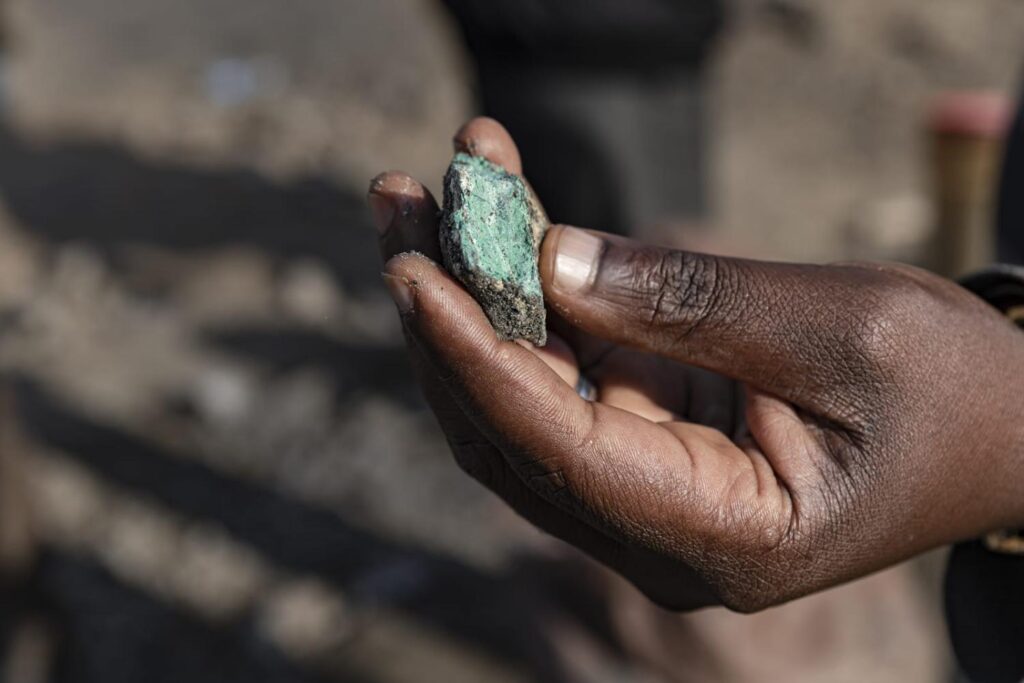
When people talk about the Democratic Republic of Congo’s mining sector, the conversation usually focuses on what lies underground — copper, cobalt, lithium and the minerals powering the global energy transition.
But there is another story that rarely gets the same attention.
Mining does not happen in isolation. It depends on an entire industrial ecosystem — engineering firms, infrastructure developers, manufacturing facilities, power systems and technical services that allow the sector to operate at scale.
Without that ecosystem, even the world’s richest mineral deposits remain just that: deposits.
And in the Democratic Republic of Congo, one company that has increasingly positioned itself at the center of that industrial backbone is MES Holdings.
Founded in 2010 and headquartered in Lubumbashi, MES has grown into one of the country’s key engineering and industrial service providers supporting mining operations across the copper belt.
While the mining majors extract the resources, companies like MES are building the infrastructure that keeps those operations running.
Building the Infrastructure That Mining Depends On
The Democratic Republic of Congo is not just another mining jurisdiction.
It is arguably the most strategically important mining country in the world today.
The country produces around 70% of global cobalt supply, a mineral that sits at the heart of lithium-ion batteries used in electric vehicles, energy storage systems and modern electronics.
At the same time, the copper belt stretching across Haut-Katanga and Lualaba provinces continues to attract billions of dollars in investment as global demand for copper accelerates.
But extracting these resources requires far more than geological potential. Mining operations depend on large-scale infrastructure including:
- power systems
- industrial processing plants
- engineering services
- heavy equipment
- supply chains and logistics
- maintenance and technical expertise
This is where MES Holdings operates as an EPCM contractor — providing engineering, procurement and construction management services to the mining industry.
In practice, that means designing, building and maintaining the facilities that allow mining companies to process and export minerals.
Building Industrial Capacity Inside Congo
One of the most important aspects of MES’s strategy has been its focus on developing industrial manufacturing capacity inside the Democratic Republic of Congo itself.
Historically, much of the equipment used by mining companies operating in the country had to be imported — often from Europe, China or South Africa.
That dependency created significant logistical challenges and increased operational costs.
MES has attempted to address that problem by establishing a series of local manufacturing facilities supplying the mining sector.
Among them is Congo Cables & Transformers, a facility based in Lubumbashi that produces copper wires, electrical cables, aluminium conductors and transformers used in industrial power systems.
These components are essential for mining operations, particularly in energy-intensive sectors like copper and cobalt processing.
The facility also includes laboratories used to test electrical products designed for industrial environments.
Another key subsidiary is Congo Piping SAS, which manufactures high-density polyethylene piping systems widely used in mining and water infrastructure projects.
These pipes play a critical role in mineral processing plants, water transport systems and industrial facilities across the copper belt.
Meanwhile Anodos Africa, another MES subsidiary, manufactures anode plates used in copper and cobalt production.
In addition to producing these components, the company also processes recycled industrial materials to manufacture lead billets used in metallurgical processes.
Taken together, these projects represent a gradual shift in Congo’s mining economy — moving parts of the industrial supply chain inside the country rather than relying entirely on imports.
For a country seeking to build long-term industrial capacity around its mineral wealth, that shift matters.
Recycling and the Circular Mining Economy
Mining operations inevitably generate industrial waste — from scrap metals and used batteries to oils and plastics.
Rather than treating these materials purely as waste streams, MES has developed recycling facilities designed to recover valuable materials and reduce environmental impact.
Through its operations in Lubumbashi, the company processes:
- copper scrap
- lead scrap
- used industrial batteries
- used oils
- plastic waste from industrial piping
Battery recycling in particular allows the company to recover high-purity lead, which can then be reused in the production of industrial components used in mining operations.
The initiative forms part of a broader environmental program known as Mission Clean Congo, aimed at reducing industrial waste and promoting recycling within the mining sector.
In an industry that faces increasing scrutiny around environmental practices, such initiatives reflect a growing push toward more sustainable industrial systems.
Powering the Mining Economy
Electricity remains one of the biggest constraints to mining development in the Democratic Republic of Congo.
Processing copper and cobalt requires enormous amounts of energy, and power shortages have historically limited production across the country’s mining regions.
MES has therefore expanded into the power infrastructure sector, supporting projects involving:
- transmission lines
- substations
- industrial electrical systems
- transformer installations
- power distribution networks
These projects are critical in regions like Katanga and Lualaba, where the mining sector continues to expand rapidly.
Without reliable electricity, the processing plants that produce copper cathodes and cobalt hydroxide cannot operate efficiently.
In that sense, power infrastructure is just as important as the minerals themselves.
Engineering Services Across the Mining Value Chain
Beyond infrastructure and manufacturing, MES provides a wide range of engineering and industrial services supporting mining companies across the country.
These services include:
- plant construction and commissioning
- equipment rental
- plant maintenance and repairs
- scaffolding and industrial installation
- technical manpower supply
- underground mining support services
With a workforce of more than a thousand employees and operations centered in Lubumbashi, the company has become one of the major engineering support providers operating in the Congolese mining sector.
Its client portfolio includes several large mining operators active in copper and cobalt production across the region.
The Bigger Picture: Industrialisation Around Mining
The broader importance of companies like MES lies in what they represent for the Democratic Republic of Congo’s long-term economic trajectory.
For decades, the country’s economy has largely revolved around exporting raw minerals with limited domestic processing or manufacturing.
But building factories that produce cables, pipes, industrial equipment and engineering services represents the early stages of something more significant: industrialisation around mining.
Instead of importing nearly everything required for mining operations, parts of that value chain can increasingly be produced locally.
That creates jobs, builds technical expertise and reduces dependence on foreign supply chains.
It also helps ensure that more of the economic value generated by the mining sector remains within the country.
Building the Ecosystem Behind the Minerals
The global energy transition is driving unprecedented demand for the minerals found in the Democratic Republic of Congo.
But minerals alone do not create economic transformation.
What matters just as much is the industrial ecosystem built around them.
Engineering companies, infrastructure developers, manufacturers and industrial service providers are all part of that system.
And while they rarely receive the same attention as the mining giants themselves, their role is just as critical.
Because in modern mining, the real story is not only about what lies underground. It is also about the industries being built above it.
Discover more from Mining News Group
Subscribe to get the latest posts sent to your email.