For the past few weeks, Mark Bristow has been the victim of a smear campaign by some Western extremists who accuse him of being a danger to local communities.
The reason given was that, “at Barrick’s recent annual shareholders’ meeting, human rights defender Lateef Johar from the Balochistan region of Pakistan raised a question about Barrick’s new mining agreements with representatives of the Pakistani central government allegedly responsible for enforced disappearances, torture, and murders in his community. The agreement was signed without the consent of the local population.” Instead of addressing Lateef’s concerns, Mark Bristow reportedly responded with “an insulting and racist tirade— using Lateef’s asylum status to try to discredit and undermine him. And then, as he escorted Lateef from the room by security, Bristow shouted at him to ‘go back to Balochistan.'”
However, those who follow the actions of this “White Zulu” (he hails from the predominantly Black South African province of KwaZulu-Natal) know that this outspoken Pan-Africanist constantly invites anyone who speaks ill of Barrick’s mines from the comfort of their air-conditioned offices to “go and live on the ground and then come and discuss” the matter with him. He says this regularly to participants at Kibali Gold Mine conferences in Kinshasa without hesitation. He is frank and direct. The POM platform, based in Lubumbashi and led by lawyer and mining human rights activist Elie Kadima Mbunda, visited the mine and the surrounding communities last year with a team to investigate the incidents surrounding the eviction from the Exclusion Zone in Bandayi and Mege, in the Watsa territory.
Earlier this year, Mr. Bristow organised a two-day open visit to his North Mara gold mine in Tanzania by the British NGO RAID (Rights and Accountability in Development), represented mainly by its executive director, Anneke van Woudenberg.
“Indeed, the intention of the visit was to allow RAID to see firsthand the positive impact Barrick has had since taking operational control of North Mara in September 2019. During the visit, RAID attended a comprehensive presentation on the mine’s operations and operating environment and was able to see the transformative impact of the mine’s sustainability strategy on its host communities, as is the case for all Barrick mines ,” reads the press release dated February 1, 2023, available online.
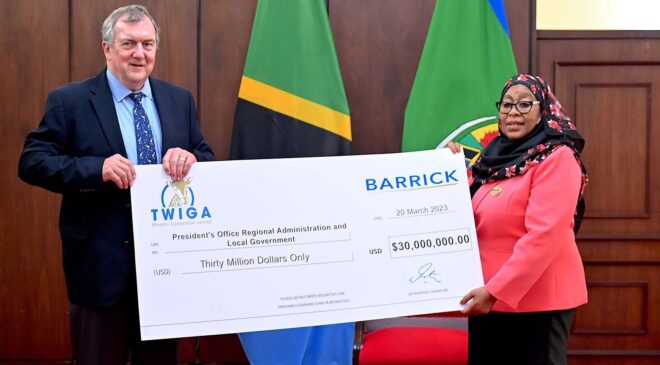
According to Barrick Gold, RAID was invited to observe one of the frequent community engagement meetings between North Mara, village presidents, ward and village executives from the 11 host villages, and their respective representatives. At this meeting, village leaders gave RAID the opportunity to raise any human rights issues they considered concerning. In line with Barrick’s findings to date, the village leaders did not corroborate the allegations raised by RAID and reiterated that there had been no prior dialogue with RAID regarding the concerns raised.
RAID also had the opportunity to see community projects, including an agribusiness providing livelihoods for over 100 young people, a clean tap water supply that will serve more than 30,000 community members, new schools, and medical facilities. These projects were all funded by the mine through a community development committee, placing the community at the heart of the decision-making process.
Finally, Barrick introduced the RAID to key local authorities and held tripartite meetings attended by the regional police commander and the district commissioner.
Barrick does not tolerate any human rights violations in its operations and encourages any individual or organization to raise concerns. The North Mara gold mine will continue to implement its sustainable development strategy. This includes engaging with and working closely with more than 20 regional and national NGOs that understand the challenges in its host communities and partner with the mine to implement socio-economic development projects.
“We encourage RAID to join these NGOs and collaborate with us on improvement initiatives. I hope the site visit was informative for RAID and that they will leave Tanzania with a new perspective on the many benefits the mine brings to its host communities and its respect for the human rights of those affected by its operations,” said Mark Bristow, President and Chief Executive Officer of Barrick, according to an official company press release.
It is established that this African man, a volunteer mining ambassador for African countries and advocate for African rights in the mining sector, operates under the “Social License” model , which is mandatory for the group in various countries, as seen in Africa. Social directors have been dismissed without notice in the DRC.
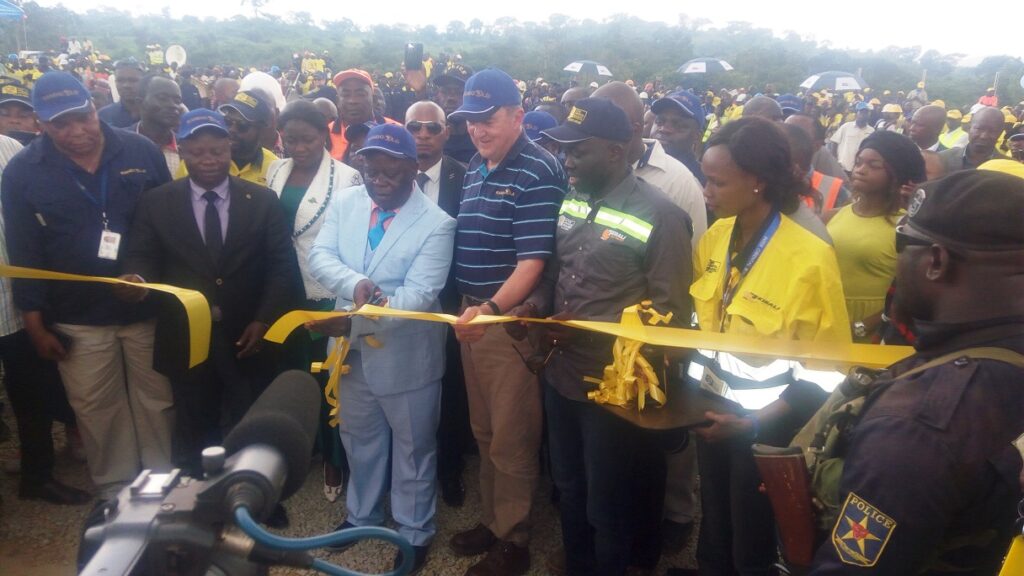
It is thanks to this rigorous community rights policy that Mark Bristow has been embraced as a “son of the Kibali sector” by the local people of this corner of the DRC. He is the only multinational CEO who spends one week every three months in contact with the communities and workers in this country, without any superiority complex and, above all, without racism. He stated this clearly at the opening session of the major annual mining conference in Cape Town (Mining Indaba 2023): “You have to respect Africans, develop mines with them when you come to invest in Africa. We will no longer accept those who want to do things without us in our own country.”
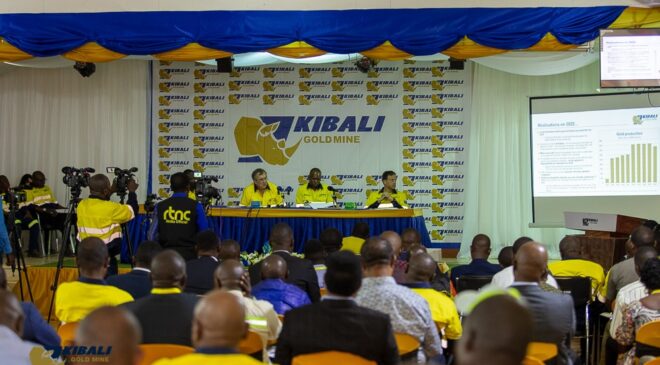
In Doko, the few white consultants hide in their rooms when they learn that Bristow is coming. Kibali and Barrick in the DRC are the only companies whose representation, management, and operations are entirely controlled by Black African and Congolese executives: Cyrille Mutombo and Arthur Kabila are at the helm. The same is true in Côte d’Ivoire, with Hilaire Diarra and Beddy Sindani in charge. Bristow is proud of this. The on-site security managers are Congolese and Black Africans, not white as is generally the case in other Congolese companies. Smith Kombo is there. Bristow is a humanitarian.
By consulting the website www.kgm-community.org , we discover that the Barrick mine in Kibali has a framework for dialogue with the communities involved on a daily basis on what is happening: the Community Development Forum , currently being restructured by Country Director Cyrille Mutombo in order to adapt it to the realities of the Mining Code revised in 2018 which involves the affected population in several axes of community development.
It was his respect for local communities and citizens of the countries hosting the mines under his management that made it easier for him to find a solution to the standoff between Tanzania and Barrick Gold before the merger with Randgold Resources.
Environmentally, Mr. Bristow is known as a champion of nature conservation, biodiversity, and green energy. This is evident at Kibali, the only mine in the country to have invested in hydroelectric and photovoltaic power plants for its mining operations. Tree planting is a way of life for him, and water conservation is a guiding principle. The protection of rare species and the repopulation of white rhinos in Garamba National Park by Barrick under Mark Bristow are compelling arguments against those who accuse him of polluting and destroying the environment.
According to journalist and mining activist Franck Fwamba, who has followed Mark Bristow since his time at Randgold: “The campaign to replace Mark Bristow as head of Barrick is being led by extremists and racists who don’t want to see an African, a defender and promoter of Africans worldwide, leading a major Western mining company. Africans must stand up and defend the man who doesn’t hide his African origins and wants to develop mines with Africans, respecting and consulting with communities like Doko around the Kibali Gold Mine. Mark will use electric equipment in the Kibali underground mine to protect the environment; the Doko Community Center is a place for public consultation. Chief Dieudonné Surur of Kibali calls Bristow a son of the Kibali area, not a racist. Mark Bristow is sending his accusers to live and see for themselves around the mine first—there’s nothing racist about that. Why don’t other mines benefit from the same standards?”
By Francine KF and Divine MM
Discover more from Mining News Group
Subscribe to get the latest posts sent to your email.